UK Employment Support Allowance Update: New Eligibility Criteria Announced for Q1 2026

The landscape of welfare benefits in the United Kingdom is constantly evolving, and a significant shift is on the horizon. The government has officially announced updated eligibility criteria for the Employment Support Allowance (ESA), set to be implemented in the first quarter of 2026. This comprehensive guide aims to dissect these crucial changes, providing clarity for current claimants, potential applicants, and support organisations alike. Understanding the nuances of these reforms is paramount to ensuring continued access to vital support or preparing for alternative pathways. The ESA eligibility update represents a pivotal moment for thousands of individuals across the UK who rely on this benefit due to illness or disability affecting their ability to work.
For years, the Employment Support Allowance has served as a cornerstone of the UK’s welfare system, offering financial assistance and personalised support to individuals whose health conditions or disabilities limit their capacity for employment. However, the government’s ongoing commitment to ‘modernising’ the welfare state and encouraging greater participation in the workforce has led to a re-evaluation of how such support is administered. These forthcoming changes are part of a broader strategy, often framed as an effort to make the system more sustainable, fairer, and more effective in empowering individuals to achieve their full potential, where possible.
The announcement of new criteria for Q1 2026 has naturally generated considerable discussion and, for many, a degree of uncertainty. It is essential to approach these updates with a clear understanding of the specifics, rather than relying on speculation. This article will delve deep into what the ESA eligibility update entails, examining the rationale behind the reforms, outlining the key changes, and offering practical advice on how individuals can prepare for their implementation. Our goal is to provide a definitive resource that demystifies the upcoming changes and equips you with the knowledge needed to navigate this new era of Employment Support Allowance.
Understanding the Current Employment Support Allowance (ESA) Framework
Before we explore the impending changes, it’s beneficial to briefly recap the existing structure of the Employment Support Allowance. ESA is designed to provide financial support to people who have a disability or health condition that affects how much they can work. It also provides support to help them get back into work if they are able to. There are two main types of ESA:
- New Style ESA: This is a contributory benefit, meaning it’s usually paid if you’ve paid enough National Insurance contributions. It can be claimed on its own or at the same time as Universal Credit.
- Income-related ESA: This is a means-tested benefit, which has largely been replaced by Universal Credit for new claims. However, some existing claimants still receive it.
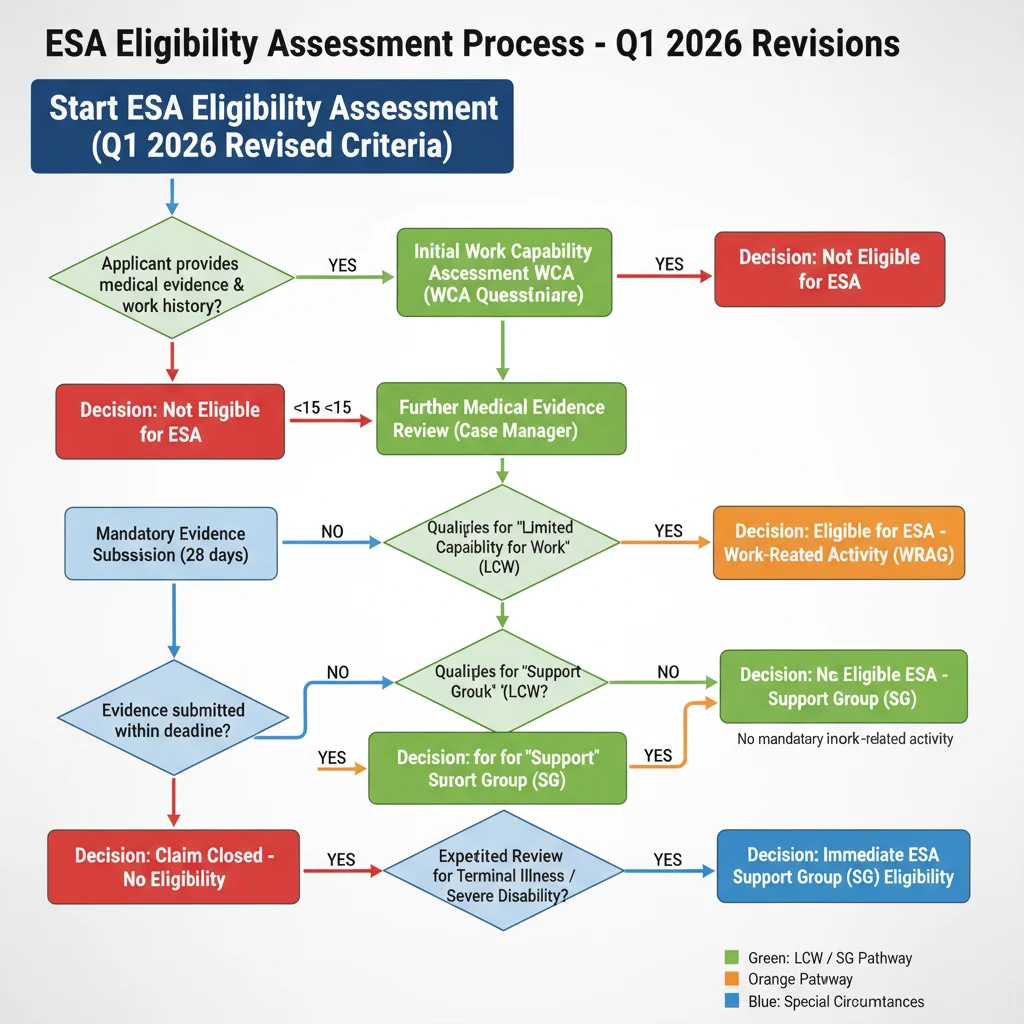
Claimants are typically placed into one of two groups after a Work Capability Assessment (WCA):
- Work-Related Activity Group (WRAG): If you’re found capable of some work-related activity, you’ll be placed in this group. You’ll receive support from a work coach to help you prepare for work.
- Support Group: If you’re found to have a severe illness or disability that significantly limits your ability to work or undertake work-related activity, you’ll be placed in this group. You’re not expected to look for work, and you receive a higher rate of benefit.
The Work Capability Assessment is central to determining eligibility and the level of support received. It assesses how a person’s illness or disability affects their ability to perform certain work-related activities. This assessment has often been a point of contention and is one area where the government is looking to introduce significant reforms. The upcoming ESA eligibility update will undoubtedly impact how these assessments are conducted and interpreted.
The Rationale Behind the Q1 2026 ESA Reforms
The government’s stated objectives for reforming the ESA system are multifaceted. Primarily, these changes are positioned as part of a broader strategy to encourage greater economic participation and reduce long-term reliance on benefits. The Department for Work and Pensions (DWP) argues that the current system, particularly the Work Capability Assessment, may not adequately reflect modern understanding of health conditions and disabilities, nor the potential for tailored support to help individuals into appropriate employment.
Key drivers for the ESA eligibility update include:
- Modernising the WCA: There’s a push to update the assessment to better reflect the realities of living with various health conditions and disabilities in a contemporary job market. This includes considering the impact of remote work and assistive technologies.
- Focus on ‘What You Can Do’: The reforms aim to shift the focus from what individuals cannot do to what they can achieve with the right support, promoting a more positive and enabling approach to employment.
- Reducing Long-Term Unemployment: By refining eligibility and enhancing support mechanisms, the government hopes to reduce the number of people who remain out of work for extended periods due to health reasons.
- Fiscal Sustainability: While not always explicitly stated as the primary driver, ensuring the long-term financial sustainability of the welfare system is an underlying consideration in any major benefit reform.
- Alignment with Universal Credit: As Universal Credit becomes the predominant benefit, there’s an ongoing effort to harmonise different benefit systems and streamline processes, reducing complexity for claimants and administrators.
Critics, however, often raise concerns about the potential for these reforms to inadvertently penalise vulnerable individuals, reduce access to crucial support, and create additional barriers to employment if not implemented with sufficient safeguards and resources. The debate surrounding these reforms is complex, balancing the need for an efficient system with the imperative to protect those most in need.
Key Changes to ESA Eligibility Criteria in Q1 2026
The core of the upcoming reforms lies in the specific alterations to the eligibility criteria and the assessment process. While the full statutory instruments are still being finalised, the DWP has outlined several key areas of change that will significantly impact how ESA is accessed and maintained. These changes will redefine who qualifies for support and the nature of that support.
Revised Work Capability Assessment Descriptors
Perhaps the most impactful change will be the revision of the Work Capability Assessment (WCA) descriptors. These descriptors are the specific criteria used to assess an individual’s ability to perform various work-related activities. The government plans to:
- Update Mental Health Descriptors: Recognising the growing prevalence and complexity of mental health conditions, there will be a focus on refining descriptors to better capture the fluctuating and often debilitating impact of conditions such as severe anxiety, depression, and PTSD on daily functioning and work capacity.
- Review Physical Health Descriptors: Descriptors related to physical health conditions will also be updated, with an emphasis on how modern adaptations and assistive technologies can mitigate some limitations. This might include a re-evaluation of how mobility, dexterity, and physical exertion are assessed in the context of a wider range of job roles.
- Introduce New ‘Engaging with Support’ Elements: There may be a stronger emphasis on an individual’s engagement with recommended support, therapy, or rehabilitation programmes as part of their journey towards potential work. Failure to engage without reasonable cause could potentially impact classification.
These revisions are expected to lead to a more nuanced, but potentially more stringent, assessment process. Individuals who previously qualified under certain descriptors may find that the updated criteria require a different level of impairment or a more comprehensive demonstration of their limitations. This ESA eligibility update means that many will need to re-familiarise themselves with the assessment process.
Impact on the Work-Related Activity Group (WRAG) and Support Group
The distinction between the WRAG and Support Group is also set to be affected. While the groups themselves may remain, the thresholds for entry into each, particularly the Support Group, could be adjusted. The aim is to ensure that only those with the most severe and enduring conditions, with minimal prospect of work-related activity, are placed in the Support Group.
- Stricter Entry to Support Group: It is anticipated that the criteria for entering the Support Group will become more rigorous, potentially requiring a higher level of functional impairment. This could mean some individuals currently in the Support Group may be reassessed and moved to the Work-Related Activity Group.
- Enhanced Support for WRAG: For those in the WRAG, there is likely to be an increased focus on tailored support, skills training, and health interventions designed to facilitate a return to work. The expectation of engaging in work-related activity may become more defined.
These changes reflect a policy direction that seeks to maximise employment potential where health conditions allow, providing more intensive support for those deemed capable of some work-related activity, while reserving the highest level of passive support for those with the most profound limitations.
Changes to Permitted Work Rules
Another area under review is the ‘permitted work’ rules, which allow ESA claimants to undertake some limited work without their benefit being affected. The government may adjust the earnings thresholds or the number of hours permitted, aiming to encourage more gradual transitions back into employment without immediately losing all benefit entitlement. This could offer greater flexibility for those testing their capacity for work.
Who Will Be Affected by the ESA Eligibility Update?
The reforms are expected to have a broad impact across various claimant groups. Understanding who is most likely to be affected is crucial for proactive planning.
- New ESA Applicants: Anyone applying for ESA from Q1 2026 onwards will be assessed under the new criteria. This means a different set of rules will apply to their initial claim and Work Capability Assessment.
- Existing ESA Claimants Undergoing Reassessment: A significant number of existing claimants, particularly those whose health conditions are subject to periodic review, will be reassessed under the new criteria. This could lead to changes in their benefit entitlement or group placement.
- Claimants Approaching Age Limits: While not directly tied to the new criteria, those nearing pension age or transitioning to other benefits may also see their situation affected by the updated system’s interactions with other welfare provisions.
- Individuals with Fluctuating Conditions: Those with conditions that vary in severity may find the new descriptors challenging, as the assessment seeks to capture a more consistent picture of functional ability.
- People with Mental Health Conditions: Given the specific focus on updating mental health descriptors, individuals whose primary disabling condition is mental health-related may experience a notable shift in how their condition is evaluated.
It’s important to stress that the impact will be individual and depend on the specific details of one’s health condition, work history, and household circumstances. The ESA eligibility update is not a blanket change, but rather a recalibration of the assessment process.
Preparing for the Q1 2026 ESA Changes: A Practical Guide
Given the significant nature of these reforms, proactive preparation is key. Here’s how current and prospective ESA claimants can get ready:
1. Stay Informed and Seek Official Guidance
The first and most important step is to stay updated with official information from the Department for Work and Pensions (DWP). The DWP will publish detailed guidance closer to the implementation date. Reliable sources include:
- Gov.uk Website: Regularly check the official government website for announcements, policy papers, and detailed guidance on the new ESA criteria.
- DWP Publications: Look out for leaflets, fact sheets, and online resources specifically addressing the Q1 2026 changes.
- Citizens Advice and Other Welfare Organisations: Organisations like Citizens Advice, Scope, Mind, and Disability Rights UK will be vital sources of independent advice and support. They often provide accessible summaries and practical tips.
2. Gather and Organise Medical Evidence
Strong medical evidence is always crucial for ESA claims and will become even more so under the new criteria. Start gathering and organising all relevant medical documentation now:
- Doctor’s Letters and Reports: Obtain copies of letters from your GP, specialists, consultants, and therapists that detail your diagnosis, symptoms, treatment, and how your condition affects your daily life and ability to work.
- Prescription Lists: Keep an up-to-date list of all medications you are prescribed.
- Hospital Records: Any records of hospital stays, appointments, or procedures related to your condition.
- Evidence of Therapy/Support: Documentation of any therapies, counselling, or support programmes you are undertaking.
- Personal Diary/Journal: Consider keeping a diary of your symptoms, how they fluctuate, and the impact they have on your daily activities, including any ‘good’ and ‘bad’ days. This can provide valuable context for assessors.
Ensure your medical evidence is as current as possible and clearly articulates the functional impact of your condition, rather than just the diagnosis. The ESA eligibility update will likely place a greater emphasis on functional limitations.
3. Understand the New Work Capability Assessment (WCA) Descriptors
Once the revised WCA descriptors are formally published, dedicate time to understanding them. Compare them to your own circumstances:
- Self-Assessment: Honestly assess how your condition aligns with each descriptor. Consider how you would explain your limitations to an assessor.
- Seek Advice: If you find the descriptors confusing or are unsure how to interpret them in relation to your condition, seek advice from welfare rights organisations or a benefits advisor.
4. Prepare for Reassessment Interviews
If you are an existing claimant, you will likely be called for a reassessment. Prepare for this as thoroughly as you would for an initial claim:
- Practice Explaining Your Condition: Be ready to clearly and concisely explain how your illness or disability affects your ability to perform daily tasks and work-related activities. Focus on what you struggle with, even on ‘good’ days.
- Bring Support: You are entitled to bring a friend, family member, or support worker with you to the assessment. They can take notes, help you remember details, and provide emotional support.
- Be Specific: Avoid vague statements. Provide concrete examples of how your condition impacts you. For instance, instead of saying ‘I have bad pain’, say ‘My back pain means I can only stand for 10 minutes before needing to sit down, and lifting anything heavier than a kettle is impossible.’
5. Explore Other Support Options
While preparing for the ESA changes, it’s also wise to explore other potential avenues of support. This might include:
- Universal Credit: If you are not already claiming Universal Credit, understand how it works and if you might be eligible, especially if the ESA eligibility update means your entitlement changes.
- Personal Independence Payment (PIP): PIP is a non-means-tested benefit for people with long-term health conditions or disabilities that affect their daily living or mobility. It’s separate from ESA and can be claimed alongside it.
- Local Authority Support: Check what support your local council offers, such as council tax support, or social care services.
- Charitable Organisations: Many charities offer condition-specific support, financial aid, or advice services.

Potential Challenges and Advocacy
The introduction of new eligibility criteria, particularly for a benefit as critical as ESA, is rarely without its challenges. There are concerns among disability advocates and welfare rights groups that the reforms could lead to:
- Increased Stress and Anxiety: The uncertainty and the prospect of reassessment can be highly stressful for vulnerable individuals.
- Wrongful Decisions: Despite intentions, changes to assessment criteria can sometimes lead to incorrect decisions, necessitating appeals.
- Reduced Entitlement: Some individuals may find their benefit reduced or stopped, leading to financial hardship.
- Barriers to Support: If the assessment process becomes overly complex or difficult to navigate, it could inadvertently create barriers for those who genuinely need support.
In light of these potential challenges, advocacy will play a crucial role. Welfare rights organisations will be instrumental in monitoring the implementation of the new criteria, providing support to claimants, and challenging unfair decisions. If you feel you have been unfairly assessed or denied benefit, it is vital to seek advice immediately and understand your rights to appeal.
The Broader Context: Future of Welfare Reform
The ESA eligibility update for Q1 2026 is not an isolated event but rather a piece of a larger puzzle in the ongoing reform of the UK’s welfare system. The government has repeatedly signalled its intention to continue reviewing and adjusting benefits to ensure they are ‘fit for purpose’ in the 21st century. This includes ongoing discussions around the future of the Work Capability Assessment itself, with some proposals suggesting its eventual integration or even abolition in favour of a more holistic approach within Universal Credit.
Claimants and support organisations should therefore view these 2026 changes not as a final destination, but as another waypoint in a journey of continuous evolution within the welfare landscape. Staying informed, adaptable, and proactive will remain essential for navigating these shifts effectively.
Conclusion
The impending changes to the UK’s Employment Support Allowance eligibility criteria in Q1 2026 mark a significant moment for welfare provision. While the government positions these reforms as necessary to modernise the system and promote greater economic participation, it is undeniable that they will have a profound impact on thousands of individuals living with illness and disability. Understanding the specifics of the ESA eligibility update, from revised Work Capability Assessment descriptors to the potential impact on claimant groups, is the first step towards navigating this new landscape.
Proactive preparation, including meticulous gathering of medical evidence, familiarisation with the new criteria, and seeking expert advice, will be crucial for current and prospective ESA claimants. While challenges may arise, the availability of support organisations and the right to appeal provide important safeguards. As the UK’s welfare system continues its evolution, staying informed and engaged will empower individuals to secure the support they need and deserve.