
Employment Support Allowance (ESA): New Eligibility Criteria for 2026 and What You Need to Know
The landscape of welfare benefits in the UK is constantly evolving, and for those who rely on Employment Support Allowance (ESA), significant changes are on the horizon. As we approach 2026, new eligibility criteria for ESA are set to be introduced, which could have a profound impact on thousands of claimants across the country. Understanding these reforms is not just beneficial; it’s absolutely crucial for anyone currently receiving ESA or contemplating applying for it in the future. This comprehensive guide aims to demystify the upcoming changes, providing you with all the essential information you need to navigate the new system effectively. We will delve into what the ESA 2026 eligibility changes entail, who will be affected, how to prepare, and where to seek further support.
Understanding Employment Support Allowance (ESA)
Before we dive into the specifics of the ESA 2026 eligibility changes, it’s important to have a clear understanding of what Employment Support Allowance (ESA) is and its original purpose. ESA is a benefit designed to provide financial support to individuals who have an illness or disability that affects their ability to work. It aims to help claimants prepare for a return to work where possible, or to provide a safety net for those who are unable to work due to their health condition. There are two main types of ESA: Contribution-based ESA (now known as ‘New Style’ ESA), which depends on your National Insurance contributions, and Income-related ESA, which is means-tested and depends on your income and savings. The current system places claimants into one of two groups after a Work Capability Assessment (WCA): the Work-Related Activity Group (WRAG) or the Support Group. Those in the WRAG are expected to undertake activities to prepare for work, while those in the Support Group are deemed unable to work and are not required to engage in work-related activities. This distinction is critical, as it determines the level of support and expectations placed upon individuals. The upcoming reforms are largely centered around refining these classifications and the expectations associated with them, directly impacting the ESA 2026 eligibility changes.
The Rationale Behind the Reforms
The government’s decision to introduce new ESA 2026 eligibility changes stems from a broader agenda of welfare reform, aiming to streamline the benefits system, encourage greater employment where possible, and ensure the system is sustainable. The stated goals often include improving support for those with health conditions, making the system fairer, and reducing long-term welfare dependency. Critics and proponents alike often debate the effectiveness and fairness of such reforms, but the underlying intention is to adapt the welfare state to contemporary economic and social challenges. The changes are also influenced by evolving understandings of disability and work, with a greater emphasis on individual capabilities and tailored support rather than a blanket approach. This shift in philosophy is a key driver behind the specific modifications to the ESA 2026 eligibility criteria, seeking to align the benefit more closely with current employment strategies and health support frameworks. It is crucial for claimants to understand this overarching context to better grasp the implications of the forthcoming changes.
Key ESA 2026 Eligibility Changes: What’s Being Proposed?
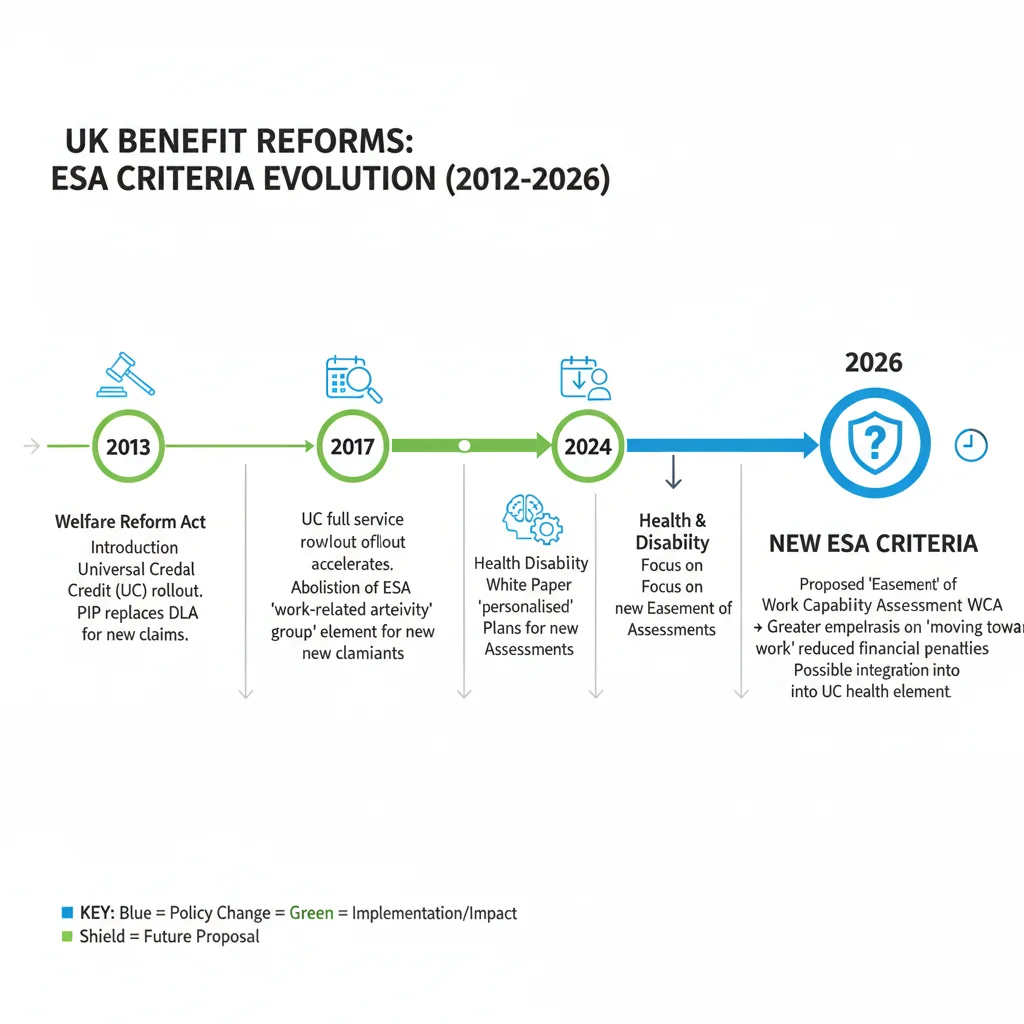
The heart of the matter lies in the specific ESA 2026 eligibility changes. While the full details are still being finalized and subject to parliamentary approval, several key proposals have been outlined that will significantly alter how ESA is assessed and awarded. One of the most prominent changes involves a re-evaluation of the Work Capability Assessment (WCA) and the criteria used to place individuals into the Work-Related Activity Group (WRAG) or the Support Group. The government has indicated a desire to move towards a more individualized assessment that focuses on what a person can do, rather than solely on what they cannot. This could mean a shift in the descriptors used in the WCA, potentially making it harder for some individuals to qualify for the Support Group or even for ESA altogether. The aim is to reduce the number of people deemed ‘unable to work’ and instead focus on providing support to help them achieve some level of employment or work-related activity.
Changes to the Work Capability Assessment (WCA)
A significant component of the ESA 2026 eligibility changes will be the modifications to the WCA. The current WCA assesses a claimant’s ability to perform various work-related activities. The proposed reforms are expected to introduce new, more stringent criteria for certain activities, potentially leading to a higher threshold for being deemed ‘unfit for work.’ For instance, there might be changes to the ‘mobilising’ or ‘coping with social engagement’ descriptors, which could affect individuals with physical disabilities or mental health conditions. The government’s white paper, ‘Transforming Support: The Health and Disability White Paper,’ has hinted at a move away from the current WCA structure towards a system that integrates more closely with Universal Credit and focuses on a ‘personalised’ approach to employment support. This could mean a greater emphasis on rehabilitation and tailored interventions rather than simply categorizing individuals. The goal is to ensure that those who are able to undertake some form of work-related activity are encouraged and supported to do so, while still protecting the most vulnerable. Understanding these potential shifts in the WCA is paramount for anyone concerned about the ESA 2026 eligibility changes, as it directly impacts their benefit entitlement.
Impact on the Work-Related Activity Group (WRAG) and Support Group
The distinction between the WRAG and the Support Group is central to the current ESA system, and the ESA 2026 eligibility changes are set to redefine these categories. It is anticipated that the reforms will aim to reduce the size of the Support Group, with more claimants being placed into the WRAG or even deemed fit for work. For those in the WRAG, there could be increased expectations regarding work-related activities, including more frequent engagement with employment advisors, mandatory training, or participation in specific programs designed to enhance employability. The government’s vision is to diminish the perception of a ‘cliff edge’ between being unable to work and being fully employed, instead fostering a smoother transition through various stages of support. This could mean a more dynamic system where claimants’ circumstances are reviewed more regularly, and expectations are adjusted accordingly. For individuals currently in the Support Group, these changes could be particularly concerning, as they might face reassessments under the new criteria, potentially leading to a reclassification and a reduction in their benefit. The implications for mental health support and long-term illness will be significant, requiring careful consideration and advocacy to ensure vulnerable individuals are not unfairly disadvantaged by the ESA 2026 eligibility changes.
Who Will Be Affected by the ESA 2026 Eligibility Changes?
The ESA 2026 eligibility changes are expected to have a broad impact, affecting both new applicants and existing claimants. It’s not just about those applying for ESA for the first time; many current recipients will likely undergo reassessments under the new criteria. This could lead to a significant shift in who qualifies for ESA, and at what level. Individuals with certain long-term health conditions or disabilities, who previously met the criteria for the Support Group, might find themselves reclassified into the Work-Related Activity Group, or even deemed fit for work. This could result in a reduction in their overall benefit entitlement and an increased expectation to engage in work-related activities. The reforms are particularly likely to affect those with fluctuating conditions, mental health issues, or conditions that are not easily quantifiable through standard medical assessments. Furthermore, the changes will impact how other benefits interact with ESA, especially Universal Credit, as the government continues its drive to integrate and simplify the welfare system. Understanding your current status and how it might align with the new criteria is the first step in preparing for the ESA 2026 eligibility changes.
Existing Claimants and Reassessments
For existing ESA claimants, the prospect of reassessment under new rules can be a source of considerable anxiety. While the exact timeline for reassessments for current claimants is yet to be fully detailed, it is highly probable that many will be called for a new Work Capability Assessment once the ESA 2026 eligibility changes are in full effect. This means that individuals who have been receiving ESA for an extended period, perhaps even those in the Support Group with no expected return to work, could face a review of their entitlement. The key here is to not panic but to be prepared. Gather all relevant medical evidence, keep detailed records of your condition and its impact on your daily life, and seek advice from welfare rights organizations. These organizations often have the most up-to-date information on how the new criteria are being applied and can offer invaluable support in preparing for reassessments. The government’s intention is to ensure that support is targeted where it is most needed, but the practical application of these changes will inevitably lead to some individuals experiencing altered outcomes. Being proactive in understanding and responding to these potential reassessments is vital for existing claimants navigating the ESA 2026 eligibility changes.
New Applicants and Future Claims
For individuals considering applying for ESA from 2026 onwards, the application process and eligibility requirements will be directly shaped by the new criteria. The initial application might involve a more streamlined process, but the subsequent Work Capability Assessment will be governed by the revised descriptors and expectations. This means that potential applicants will need to be acutely aware of the updated criteria and ensure their application clearly demonstrates how their illness or disability meets these new standards. It is advisable for new applicants to seek guidance from welfare advisors or disability support organizations even before starting their application. They can provide insights into the nuances of the new system, help compile necessary medical evidence, and ensure the application is as robust as possible. The emphasis on ‘what you can do’ rather than ‘what you cannot’ will likely be a core principle, so applicants should be prepared to articulate their capabilities and limitations in that framework. The ESA 2026 eligibility changes will fundamentally reshape the entry points and assessment journey for all future claimants, making informed preparation more critical than ever.
Preparing for the ESA 2026 Eligibility Changes
Given the significant nature of the ESA 2026 eligibility changes, preparation is key. Proactive steps can help mitigate potential disruptions to your benefits and ensure you receive the support you are entitled to. The first and most important step is to stay informed. Government announcements, welfare rights organizations, and reputable news sources will be the best places to get the latest updates as the reforms are implemented. Do not rely on hearsay or outdated information. Beyond staying informed, there are practical steps you can take to strengthen your position, whether you are an existing claimant or a potential new applicant. This includes meticulously documenting your health condition, understanding your rights, and knowing where to turn for expert advice. The more prepared you are, the better equipped you will be to navigate the complexities of the new system and ensure your voice is heard throughout any assessment process related to the ESA 2026 eligibility changes.
Gathering Medical Evidence
One of the most crucial aspects of preparing for the ESA 2026 eligibility changes, particularly for the Work Capability Assessment, is gathering comprehensive and up-to-date medical evidence. This includes letters from your GP, specialists, therapists, and any other healthcare professionals involved in your care. Ensure these documents clearly outline your diagnosis, symptoms, treatments, and, most importantly, how your condition impacts your daily life and ability to perform work-related activities. It is not enough to simply state you have a condition; the evidence must detail the functional limitations it imposes. If your condition fluctuates, keep a diary of your ‘good’ and ‘bad’ days, noting how this affects your ability to perform tasks. This can provide a more accurate picture of your overall capacity. Consider asking your healthcare providers to write a supporting letter specifically addressing the WCA descriptors, if possible. Strong medical evidence is often the cornerstone of a successful ESA claim or reassessment, and its importance will only increase with the introduction of the ESA 2026 eligibility changes.
Seeking Expert Advice and Support
Navigating the welfare system can be complex, and the ESA 2026 eligibility changes will undoubtedly add further layers of intricacy. This is where seeking expert advice becomes invaluable. Organizations such as Citizens Advice, Disability Rights UK, Mind, and other local welfare rights groups specialize in providing free, impartial advice and support to individuals claiming benefits. They can help you understand the new criteria, assist with completing application forms, prepare for Work Capability Assessments, and even represent you at tribunals if necessary. Do not hesitate to reach out to these organizations as early as possible. They often have insights into how the Department for Work and Pensions (DWP) is interpreting and applying new policies, which can be critical for your case. Attending workshops or information sessions offered by these groups can also be highly beneficial. Building a support network and leveraging expert knowledge will be instrumental in successfully navigating the ESA 2026 eligibility changes.
The Broader Context: ESA and Universal Credit
The ESA 2026 eligibility changes do not exist in a vacuum; they are part of a larger ongoing reform of the UK’s welfare system, with Universal Credit (UC) at its core. The government’s long-term vision is to migrate all legacy benefit claimants, including those on ESA, to Universal Credit. While ‘New Style’ ESA can be claimed alongside Universal Credit, Income-related ESA is gradually being phased out and replaced by UC. This integration means that understanding the implications of the ESA 2026 eligibility changes also requires an understanding of how they interact with Universal Credit. For many, the transition to UC will bring its own set of challenges, including different payment structures, reporting requirements, and conditionality. The new ESA criteria are likely to be designed to align more closely with the principles and assessment framework of Universal Credit, further emphasizing the shift towards a single, streamlined benefit system. Therefore, claimants should not only focus on the ESA-specific changes but also consider their broader position within the Universal Credit framework.
Transitioning to Universal Credit
For many current ESA claimants, the ESA 2026 eligibility changes might coincide with a ‘managed migration’ to Universal Credit. This process involves the DWP notifying claimants that their existing benefits are ending and that they need to apply for Universal Credit. It is a crucial period, and failing to apply for UC within the specified timeframe can lead to a loss of benefits. When transitioning, it’s vital to understand how your current ESA components (e.g., the Support Group element) will translate into Universal Credit payments. UC has its own health element, the Limited Capability for Work and Work-Related Activity (LCWRA) element, which is equivalent to the ESA Support Group. The new ESA assessment criteria will likely influence who qualifies for the LCWRA element under Universal Credit. Therefore, preparing for the ESA 2026 eligibility changes is also preparation for a potential transition to Universal Credit, requiring careful attention to timelines, documentation, and seeking advice to ensure a smooth and financially stable move.

Potential Challenges and How to Address Them
While the stated aim of the ESA 2026 eligibility changes is to improve support and promote employment, any significant reform to welfare benefits inevitably presents challenges for claimants. One primary concern is the potential for increased stress and anxiety among vulnerable individuals due to uncertainty, fear of benefit loss, and the complexity of navigating new rules. To address this, mental health support and clear, accessible communication from the DWP will be more important than ever. Another challenge could be the capacity of support services to handle an increased demand for advice and assistance, emphasizing the need for claimants to seek help early. There may also be a rise in appeals against WCA decisions, highlighting the importance of robust evidence and strong advocacy. Claimants should be aware of their right to appeal and the processes involved. Furthermore, the practical implications of increased work-related activity expectations for those with severe health conditions or disabilities need to be carefully monitored to ensure they are realistic and genuinely supportive, rather than punitive. Being aware of these potential hurdles allows for better planning and more effective engagement with the system as the ESA 2026 eligibility changes unfold.
Advocacy and Your Rights
In the face of the ESA 2026 eligibility changes, understanding and asserting your rights is paramount. You have the right to a fair assessment, the right to provide comprehensive evidence, and the right to appeal any decision you believe is incorrect. If you feel your assessment was unfair, or if you disagree with a decision made about your ESA entitlement, you can ask for a Mandatory Reconsideration. If still unsatisfied, you can then appeal to an independent tribunal. Throughout this process, having an advocate or support person can make a significant difference. Advocacy groups can help you understand the legal framework, present your case effectively, and ensure your voice is heard. They can also highlight systemic issues or unfair practices to policymakers. Engaging with these groups not only supports your individual claim but also contributes to broader efforts to ensure the welfare system remains fair and just for all. Your active participation in understanding and asserting your rights is a powerful tool in navigating the ESA 2026 eligibility changes successfully.
Conclusion: Staying Ahead of the ESA 2026 Eligibility Changes
The upcoming ESA 2026 eligibility changes represent a significant transformation in how Employment Support Allowance is assessed and delivered. For thousands of individuals relying on this vital benefit, these reforms will necessitate a proactive approach to understanding, preparing, and adapting. From changes to the Work Capability Assessment and the classification of claimants into different support groups, to the broader context of Universal Credit migration, the landscape of welfare support is shifting. By staying informed through official channels and reputable support organizations, meticulously gathering medical evidence, and seeking expert advice, claimants can empower themselves to navigate these changes effectively. While challenges are inevitable, a prepared and informed approach, coupled with strong advocacy, can help ensure that individuals continue to receive the support they need and are entitled to. The journey ahead might be complex, but with the right information and resources, you can confidently face the ESA 2026 eligibility changes and secure your future financial well-being.