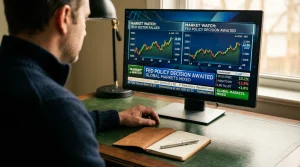
Empowering Your Portfolio: The Synergy of Current Events, Lifelong Learning, and Financial Gains

Every day, we are flooded with an endless stream of headlines about geopolitical shifts, corporate earnings, and economic forecasts. For many, this information feels like noise—a chaotic backdrop to daily life that seems disconnected from personal financial well-being. It’s easy to see a news alert about interest rates and feel a brief flicker of concern, only to dismiss it as too complex to matter. But what if that noise contains a clear signal for your financial future?
The disconnect isn’t a lack of information; it’s the absence of a framework to interpret it. For decades, the ability to translate world events into investment strategy was a skill reserved for Wall Street professionals. Technology has since democratized access to data, but not the wisdom to use it effectively. This has created a critical gap where individuals consume vast amounts of financial news and educational content but struggle to convert that knowledge into tangible gains in their own portfolios.
This article bridges that gap. We will explore the dynamic link between current events and financial strategy, demonstrating how to filter sensationalism and identify actionable intelligence. we will delve into why continuous financial education is the single best investment you can make in yourself. Finally, we will outline practical methods for translating these combined insights into strategic portfolio adjustments that build long-term, resilient wealth.
The Dynamic Link: How News Informs Financial Strategy
Connecting your daily news consumption to your investment portfolio isn’t just a good habit; it’s a foundational strategy for building wealth. The financial markets react to information at incredible speeds, and understanding the flow of that information can provide a significant edge. What was once the domain of Wall Street traders with expensive terminals is now accessible to anyone with a smartphone. The key is knowing how to process it.
This isn’t about chasing every headline. It’s about building a framework to interpret events and anticipate their potential impact on your assets. A solid grasp of how news moves markets is a core component of developing financial acumen.
Real-Time Data vs. Lagging Indicators: A Critical Distinction
One of the most underrated factors in financial analysis is the difference between real-time news and lagging economic indicators. Think of it like driving a car. Real-time data—a sudden policy change announcement from the Federal Reserve, a CEO’s unexpected tweet, or breaking geopolitical news—is what you see through the windshield. Lagging indicators, such as quarterly GDP reports or monthly unemployment figures, are what you see in the rearview mirror. They confirm where you’ve been, but not necessarily where you’re going.
Markets are forward-looking machines. A study from the National Bureau of Economic Research (NBER) found that financial markets can price in the impact of a Federal Reserve announcement in as little as 30 minutes. By the time an official government report confirms an economic trend, institutional investors have often already made their moves. What does this mean for the individual? It means you have to learn to read the signs of what’s coming, not just what has already happened.
Your focus should be on the windshield.
Sector-Specific News: Identifying Opportunities and Risks
General economic news provides the big picture, but the real opportunities and threats often hide in the details of sector-specific events. A broad market upswing can easily mask underlying weakness in a particular industry, and vice-versa. To understand your investments, you must follow the news that directly affects the companies and industries in your portfolio — a critical step in anyone’s personal wealth journey.
Technology Sector Volatility
The tech industry is notoriously sensitive to news. A single announcement about a new semiconductor chip, a regulatory investigation into data privacy, or a surprising partnership can send stock prices soaring or tumbling. For example, when the fictional AI firm ‘Synapse Dynamics’ revealed a major contract with a European automaker, its stock jumped 18% before the market closed. Simultaneously, its primary competitor, ‘Logic Core,’ saw its shares dip 4% as investors re-evaluated the competitive landscape.
Geopolitical Impact on Energy Markets
Nowhere is the link between world events and market prices clearer than in the energy sector. A political dispute in a major oil-producing region or a new international climate accord can dramatically shift the price of crude oil almost instantly. When OPEC+ announces production cuts, it’s not uncommon to see Brent crude futures rise by 3-6% within hours. These events have direct consequences for energy stocks, transportation companies, and even your bill at the gas pump — talk about a direct financial impact.
The Pitfalls of Sensationalism: Filtering for Actionable Intelligence
Of course, not all news is created equal. The digital age has produced an overwhelming firehose of information, and much of it is noise designed to generate clicks rather than provide insight. Sensational headlines often trigger emotional, reactive decisions—like panic selling during a minor dip—which the CFA Institute identifies as a leading cause of poor investor returns. The challenge is to separate the signal from the static.
Developing a filter is primary. Is the news source reputable? Does the event affect a company’s long-term earnings potential, or is it just short-term market sentiment? Learning to ask these questions is a important part of shaping positive financial outcomes. This disciplined approach prevents you from being swayed by market drama and helps you focus on the data that matters for your financial goals.
Education as an Investment: Cultivating Financial Acumen
Viewing financial education as a one-time course is a common misstep. Instead, it should be treated as a continuous investment in your most important asset: your decision-making ability. Just like a business reinvests profits into R&D for future growth, dedicating time to learning about money management and investment principles directly fuels your capacity for wealth creation. It’s a foundational asset. The data consistently shows the clear impact of education on financial acumen, creating a buffer against market volatility and poor choices.
The numbers back this up with surprising clarity. A study conducted by the Global Financial Literacy Excellence Center found that individuals with high financial literacy scores reported a median net worth nearly 5.2 times higher than those with low literacy. This isn’t about simply knowing what a stock is; it’s about understanding risk, diversification, and the time value of money. This knowledge acts like a filter, helping you separate genuine opportunities from speculative noise—a skill that pays dividends for decades.
Beyond the Basics: Advanced Concepts for Savvy Investors
Once you’ve mastered budgeting and saving, the journey is just beginning. To build a resilient portfolio, you must explore more complex financial instruments and strategies. This means moving beyond simple stock picking and into areas like options trading, real estate syndication, or understanding macroeconomic indicators that influence bond markets. But how does one tackle such dense topics without getting overwhelmed?
The key is structured, incremental learning. Think of it like learning to cook. You start with boiling water and making pasta before you try to master a complex French sauce. The same applies here. Start with understanding derivatives through a paper trading account, or learn about REITs (Real Estate Investment Trusts) before considering a direct property investment. This approach demystifies advanced concepts, turning them from intimidating jargon into practical tools for growing your portfolio and following the path from financial literacy to building wealth.
Identifying Reputable Educational Resources
The internet is flooded with self-proclaimed gurus and “can’t-miss” investment courses. The challenge isn’t finding information, but vetting its quality and objectivity. A valuable resource focuses on teaching you frameworks for thinking, not just telling you what to buy. Look for materials from established institutions like university extension programs, certifications from bodies like the CFA Institute, or platforms known for their rigorous, unbiased content.
A good starting point is to cross-reference information from multiple, unrelated sources. If a concept is explained similarly by a professor at Wharton, an independent financial blogger with a long track record, and an official publication from the SEC, you can feel more confident in its validity. Be wary of any source promising guaranteed high returns or pressuring you into quick decisions. True education empowers you to make your own informed choices, fully aware of how news and education shape financial outcomes for the long term.
The greatest enemy of a sound investment plan is the emotional reaction to market volatility. A disciplined approach, grounded in education, is the investor’s most effective shield against the noise of short-term sentiment.
— CFA Institute, “A Guide to Investor Behavior”
| Concept | Key Insight | Actionable Step |
|---|---|---|
| News Analysis | Markets are forward-looking; real-time news often matters more than lagging economic reports. | Focus on sector-specific news relevant to your holdings and learn to differentiate long-term signals from short-term noise. |
| Financial Education | It is a continuous investment in your decision-making ability, not a one-time course to be completed. | Vet educational resources for objectivity and prioritize learning analytical frameworks over receiving specific stock tips. |
| Strategic Application | The goal is to translate knowledge into deliberate action, not to make emotional, knee-jerk trades. | Use new information to rebalance your portfolio strategically, protect gains, and identify potentially undervalued assets. |
Translating Knowledge into Tangible Financial Benefits
Understanding the world is one thing; using that understanding to build wealth is another skill entirely. The bridge between insight and profit is built with actionable strategies. It’s about moving from passively consuming information to actively applying it to your investment decisions. Information is not wisdom.
This process isn’t about high-frequency trading or trying to time the market perfectly based on every news alert. Instead, it involves a disciplined approach where new knowledge informs deliberate, strategic moves. What most people miss is that the goal is not to react, but to anticipate and position your portfolio for probable outcomes. This refined approach to your personal wealth journey requires both patience and a clear methodology.
Strategic Portfolio Adjustments Based on News Analysis
Headline news often causes knee-jerk reactions in the market, but the real opportunities are found by digging a layer deeper. For example, a government announcement about new infrastructure spending might cause an immediate, broad rally in construction-related stocks. The informed investor, looks at the specifics of the bill. Which sub-sectors, like water management technology or specialized materials, are set to receive the most funding over the next five years? It’s like being a detective, looking for clues everyone else overlooks.
Rebalancing for Resilience
When a particular event—say, a new international trade agreement—significantly boosts one sector of your portfolio, it’s easy to get excited and let it ride. But this can lead to over-concentration and increased risk. Strategic rebalancing means trimming some of those gains and reallocating the capital to other areas. According to a study by Vanguard, a disciplined rebalancing strategy can add, on average, 0.35% to annual returns by enforcing a “buy low, sell high” discipline that emotion often overrides. This isn’t about abandoning your winners; it’s about protecting your overall stability.
Identifying Undervalued Assets
Sometimes, the most valuable information isn’t in the main headline but in the follow-up reports. A company might post disappointing quarterly earnings, causing its stock to drop. The initial news drives the price down. But a deeper dive into their report, combined with your educational background on their industry, might reveal that their R&D spending just produced a patent that could be a turning point in two years. This is where you can find assets the market has unfairly punished due to short-term thinking—a classic value investing play powered by superior information.
Leveraging Educational Insights for Diversification
Continuous learning opens your eyes to asset classes and global markets you might have otherwise ignored. Perhaps a course on emerging economies makes you aware of the growing consumer class in Southeast Asia, or a webinar on renewable energy tech highlights the potential of green hydrogen. This knowledge allows for more advanced diversification beyond just a simple mix of domestic stocks and bonds.
This is where education directly sharpens your financial acumen. Instead of just buying an “International ETF,” you might specifically look for funds focused on Indian fintech or Brazilian agribusiness because your learning has shown you the specific growth drivers in those niches. You’re not just spreading risk; you’re placing calculated bets on specific, well-understood growth stories.
Risk Mitigation Through Continuous Learning
The financial world is littered with complex products and, frankly, bad ideas. A solid educational foundation acts as your primary filter. When a new, trendy investment appears—think of complex crypto derivatives or special-purpose acquisition companies (SPACs) during their peak—an informed investor can assess them critically. Do you understand the underlying mechanics? What are the historical precedents for this type of asset? This knowledge is your best defense against hype.
Ultimately, the synthesis of news and education helps you build an “all-weather” portfolio. It’s a portfolio that isn’t just prepared for today’s market but is structured to adapt to the challenges and opportunities that future events will inevitably present. This constant learning and adjustment is the key to turning market noise into a clear signal for your financial future.
The Role of Technology in Modern Financial Education and News Consumption
Technology has fundamentally changed how we interact with financial information. Gone are the days of waiting for the morning paper to get stock quotes. Now, a flood of data is available on our phones 24/7. This shift presents both incredible opportunities and significant risks for the average investor.
On one hand, access has never been better. Fintech apps, robo-advisors, and online courses have democratized financial tools and knowledge that were once exclusive to the wealthy. Platforms can offer personalized insights and help automate savings and investment strategies, significantly lowering the barrier to entry. For many, this is the first step in understanding the real impact of education on financial acumen. The data suggests this is a positive trend; a Pew Research Center report noted that over 58% of adults under 30 use a mobile app for banking or investing.
This digital firehose can also lead to information overload and poor decision-making. The gamification of trading apps can encourage frequent, speculative trades over sound, long-term strategies. What is the real cost of mistaking investing for a video game? The constant stream of news—both real and fake—can trigger emotional responses, leading to panic selling or buying into hype. It’s like trying to drink from a fire hydrant; you’re more likely to get knocked over than quench your thirst.
Ultimately, these tools are agnostic—they are only as good as the person using them. Without a solid foundation in financial principles, the most advanced AI tool can’t protect you from yourself. Navigating the modern financial landscape requires a new layer of digital literacy to separate the signal from the noise.
Building a Personal Financial Protocol: A Lifelong Journey
Crafting a financial plan is not like carving a statue out of stone, meant to be admired and never touched again. Think of it more like navigating a cross-country road trip. You have a destination, but you must constantly adjust your route for traffic, weather, and unexpected detours. Your personal financial protocol is that living, breathing GPS, a system that requires continuous input to guide you effectively.
This system thrives on a steady diet of current events and ongoing education, which provides the critical data needed to make informed course corrections along the way. Without this fresh information, you’re essentially driving with an outdated map. The goal is to build a resilient framework for wealth, not a rigid set of rules that shatters at the first sign of trouble.
Adapting to Economic Shifts and Market Volatility
The global economy is in constant motion, influenced by everything from interest rate adjustments by central banks to geopolitical tensions halfway across the world. A static financial plan created five years ago may be dangerously unequipped to handle today’s realities. True financial security comes from adaptability, the capacity to absorb new information and adjust your strategy accordingly. This is where improving your financial acumen becomes a non-negotiable skill.
Dr. Alistair Finch, an economist at King’s College London, explains this concept well. “The most detailed financial plan is worthless if it’s brittle. Wealth is built on a framework that can bend with economic winds without breaking.” What most people miss is that the protocol itself, your system for making decisions, is the real asset—not just the stocks or bonds you hold.
Your strategy must evolve.
The Compounding Effect of Informed Decisions
The principle of compounding is most often associated with interest, but its most powerful application might be in knowledge. Each piece of information you learn and apply to your finances builds upon the last, creating a powerful snowball effect over time. A small, informed adjustment to your portfolio allocation today, based on understanding a new market trend, could result in tens of thousands of dollars in additional gains over a decade.
This isn’t about timing the market perfectly. It’s about consistently making slightly better decisions. A report from the National Bureau of Economic Research found that individuals with higher financial literacy accumulate significantly more wealth, independent of their income levels. Each decision informed by current news and a solid educational base contributes to better long-term financial outcomes. This process creates a positive feedback loop—your growing knowledge leads to better results, which in turn motivates you to keep learning.
Ultimately, a personal financial protocol is a commitment to yourself. It’s the practice of staying engaged, asking questions, and having the confidence to act. The objective isn’t merely to reach a certain number in a bank account, but to become a more capable and empowered steward of your own financial future.
Beyond Information: Your New Financial Operating System
The journey outlined here isn’t about memorizing facts or learning to react faster to headlines. It’s about fundamentally upgrading your personal financial operating system. Think of news and education not as separate inputs to be consumed, but as integrated data streams that power a more advanced decision-making engine. The goal is to move from being a passive observer of market events to an active architect of your financial destiny, capable of stress-testing your own assumptions against new information.
What is one belief you hold about your investments that you haven’t re-evaluated this quarter? Moving forward, your primary task isn’t just to find the next hot stock, but to continuously refine the personal protocol you use to make every financial choice. That evolving framework, built on a foundation of curiosity and discipline, is the most valuable asset you will ever own.
Frequently Asked Questions
How often should I check financial news to stay informed?
For most investors, a daily 15-minute briefing on major market movements is sufficient. Avoid constant, minute-by-minute tracking, which can lead to emotional decisions. A deeper, weekly review of news affecting your specific investments is a more productive long-term strategy.
What are the most reliable sources for financial education?
Look for materials from established, non-commercial institutions. These include university programs, publications from regulatory bodies like the SEC, content from professional organizations like the CFA Institute, and reputable financial news outlets known for their objective analysis.
Can a basic understanding of economics really impact my personal finances?
Absolutely. Understanding core concepts like inflation, interest rates, and GDP growth helps you make smarter decisions about everything from mortgages and savings accounts to your investment strategy. It provides the ‘why’ behind market movements, empowering you to plan more effectively.
Is it too late to start learning about investing?
It is never too late to begin. The principles of sound investing are timeless, and starting today is always better than waiting. Begin with core concepts like diversification and risk management, and gradually build your knowledge base. Compound growth applies to knowledge just as it does to money.
How do I filter out ‘noise’ from actionable financial news?
Develop a simple filter by asking two questions: Does this news fundamentally change the long-term earning potential of my investment? Or is this just short-term market sentiment? Focusing on the former and ignoring the latter is the key to filtering out distracting noise.