Housing Benefit vs. Universal Credit Housing Element: A 2026 Comparison for UK Renters

As the UK welfare landscape continues to evolve, understanding the nuances of housing support is paramount for millions of renters. The transition from legacy benefits to Universal Credit has been a significant undertaking, and by 2026, the shift is largely complete, yet the distinctions between Housing Benefit and the Universal Credit Housing Element remain a critical area of confusion and concern. This comprehensive guide aims to demystify these two crucial forms of assistance, providing a detailed 2026 comparison to empower UK renters with the knowledge they need to navigate their housing costs effectively.
For many years, Housing Benefit served as the primary means of support for those struggling to pay their rent. It was a standalone benefit, administered by local authorities, designed to help low-income individuals and families cover their housing costs. However, with the introduction of Universal Credit, a new, integrated welfare system, the Housing Element emerged as the modern counterpart, subsuming Housing Benefit for most new claimants and, progressively, for existing ones through managed migration.
This article will delve deep into the mechanics of both Housing Benefit and the Universal Credit Housing Element, exploring their respective eligibility criteria, how they are calculated, and the key differences that impact renters across the UK. We will also address common misconceptions, provide practical advice for claimants, and look ahead at potential future developments, ensuring you are well-informed about your rights and options in 2026 and beyond.
Understanding Housing Benefit: The Legacy System in 2026
While Universal Credit has largely replaced legacy benefits, Housing Benefit still exists for specific groups of people in 2026. It’s crucial to understand who might still be claiming it and why, as well as its fundamental principles.
Who Still Claims Housing Benefit?
- Pensioners: If both you and your partner (if you have one) have reached State Pension age, you might still claim Housing Benefit. There are specific rules regarding mixed-age couples, where one partner is of State Pension age and the other is not, which can affect whether you claim Housing Benefit or Universal Credit.
- People in Supported, Exempt, or Temporary Accommodation: Individuals living in certain types of specialized housing, such as supported accommodation (where you receive care, support, or supervision), exempt accommodation (provided by a housing association, charity, or voluntary organisation where you receive a certain level of care), or temporary accommodation arranged by a local authority due to homelessness, may still be eligible for Housing Benefit. These types of accommodation often have higher costs and specific support needs that Housing Benefit is better equipped to address.
- Existing Claimants Not Yet Migrated: While the managed migration of legacy benefit claimants to Universal Credit is well underway, a small number of existing Housing Benefit claimants may not yet have been moved over. This group is diminishing rapidly, but it’s a possibility.
Key Features of Housing Benefit
Housing Benefit operates on several core principles:
- Local Authority Administration: Unlike Universal Credit, which is administered by the Department for Work and Pensions (DWP), Housing Benefit is managed by your local council. This means application processes, local policies, and communication can vary significantly between different local authorities.
- Means-Tested: Eligibility and the amount of Housing Benefit you receive are heavily dependent on your income, savings, and household circumstances. The lower your income and savings, the more Housing Benefit you are likely to receive.
- Rent Officer’s Role: For private rented accommodation, the amount of Housing Benefit you can receive is often limited by the Local Housing Allowance (LHA) rates, which are determined by the Valuation Office Agency (VOA) for different broad rental market areas. These rates set the maximum amount of rent that Housing Benefit will cover, regardless of your actual rent.
- Direct Payments: Housing Benefit can be paid directly to you or, in some cases, directly to your landlord. Direct payment to landlords is more common for social housing tenants or if you have rent arrears.
Calculating Housing Benefit
The calculation of Housing Benefit is a complex process that considers several factors:
- Eligible Rent: This is the amount of rent your local authority determines can be covered. For private tenants, this is often capped by the Local Housing Allowance (LHA) for your area and household size. For social housing tenants, it’s usually your actual rent, minus certain charges like those for water or fuel.
- Income and Savings: All forms of income (earnings, other benefits, pensions) are taken into account. Certain disregards apply, meaning some income is ignored. Savings above a certain threshold (£16,000 for most, but higher for some pensioners) can disqualify you or reduce your benefit.
- Household Circumstances: Factors such as the number of bedrooms you need (the ‘bedroom tax’ or ‘under-occupancy charge’ for social housing tenants), the age and number of people living in your household, and any disabilities can all influence the amount you receive.
It’s important to note that Housing Benefit is paid weekly or fortnightly, reflecting its more traditional structure compared to Universal Credit’s monthly payment cycle.
Universal Credit Housing Element: The Modern Approach in 2026
The Universal Credit Housing Element is now the primary form of housing support for most working-age individuals and families in the UK. Integrated within the broader Universal Credit system, it represents a fundamental shift in how housing costs are supported.
Who Claims the Universal Credit Housing Element?
By 2026, if you are of working age and need help with your rent, you will almost certainly be claiming the Housing Element as part of your Universal Credit award. This includes:
- New claimants for benefits who need help with housing costs.
- Existing claimants of legacy benefits (like Jobseeker’s Allowance, Employment and Support Allowance, Income Support, Working Tax Credit, Child Tax Credit) who have been migrated to Universal Credit.
- Individuals moving from Housing Benefit to Universal Credit due to a change in circumstances (e.g., starting work, moving to a different type of accommodation not covered by Housing Benefit exemptions).
Key Features of the Universal Credit Housing Element
The Housing Element shares some similarities with Housing Benefit but operates within a distinct framework:
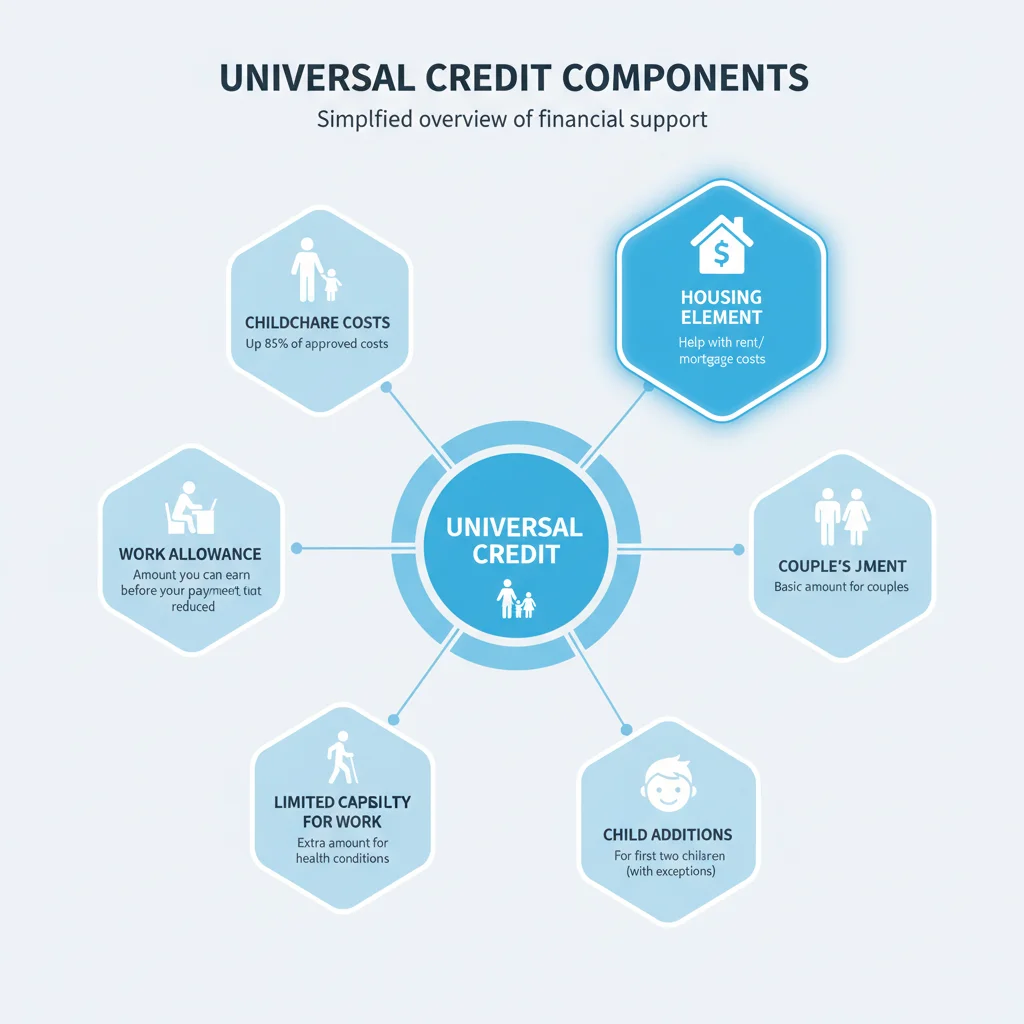
- Integrated Benefit: The Housing Element is not a standalone benefit but a component of your overall Universal Credit award. This means it’s calculated alongside your other elements (e.g., standard allowance, child element, disability elements).
- DWP Administration: Universal Credit, including the Housing Element, is administered nationally by the Department for Work and Pensions (DWP). This aims for a more consistent application and payment process across the country compared to the local authority variations of Housing Benefit.
- Means-Tested: Like Housing Benefit, the Housing Element is means-tested. Your total Universal Credit award, including the Housing Element, is reduced as your income increases.
- Local Housing Allowance (LHA) Rates: For private rented tenants, the maximum amount of the Housing Element you can receive is generally capped by the Local Housing Allowance (LHA) rates for your area and household size. These rates are crucial for understanding how much of your rent will be covered.
- Monthly Payments: Universal Credit is paid monthly in arrears, typically into a single bank account. This means your Housing Element is included in this monthly payment, and you are responsible for paying your landlord.
Calculating the Universal Credit Housing Element
The calculation of the Housing Element is part of the broader Universal Credit assessment:
- Maximum Eligible Housing Costs: This is determined by your rent liability and, for private tenants, capped by the relevant Local Housing Allowance (LHA) rate for your area and household size. For social housing tenants, it’s usually your actual rent (excluding ineligible service charges).
- Bedroom Entitlement: Similar to Housing Benefit, the number of bedrooms you are deemed to need (based on household composition) affects the LHA rate applied for private tenants and the ‘under-occupancy charge’ for social housing tenants.
- Overall Universal Credit Calculation: Your maximum Housing Element is added to your other Universal Credit elements to form your maximum Universal Credit award. This total is then reduced by a ‘taper rate’ as your earned income increases, and by any unearned income or savings above a certain threshold.
It’s vital to understand that if your rent is higher than your maximum Housing Element, you will need to cover the shortfall yourself from other income or savings.
Key Differences Between Housing Benefit and Universal Credit Housing Element in 2026
While both aim to help with rent, the operational and structural differences between Housing Benefit and the Universal Credit Housing Element are significant and can profoundly impact renters.
1. Administration and Integration
- Housing Benefit: Administered by local councils, leading to local variations in application processes, processing times, and discretionary payments. It’s a standalone benefit.
- Universal Credit Housing Element: Administered by the DWP as part of a single, integrated monthly payment. This aims for national consistency but means all your benefits are bundled together.
2. Eligibility Criteria
- Housing Benefit: Primarily for pensioners, those in specific supported/exempt accommodation, or a shrinking number of legacy claimants.
- Universal Credit Housing Element: For most working-age individuals and families needing help with rent.
3. Payment Structure and Frequency
- Housing Benefit: Typically paid weekly or fortnightly, often directly to the landlord for social housing.
- Universal Credit Housing Element: Paid monthly, in arrears, as part of your overall Universal Credit payment. You are generally responsible for paying your landlord yourself, which requires careful budgeting.
4. Direct Payments to Landlords (Managed Payments)
- Housing Benefit: Direct payments to landlords are common, particularly in social housing or if the tenant has arrears.
- Universal Credit Housing Element: While the DWP prefers claimants to manage their own rent payments, a ‘managed payment’ directly to the landlord can be requested in specific circumstances, such as if a tenant is struggling with budgeting or is in arrears. This is not automatic and requires a specific request or DWP intervention.
5. Capital and Savings Thresholds
- Housing Benefit: Generally, savings over £16,000 mean you are not eligible, or your benefit is reduced.
- Universal Credit Housing Element: Savings between £6,000 and £16,000 reduce your Universal Credit payment (including the Housing Element). Savings over £16,000 mean you are not eligible for Universal Credit at all.
6. Impact of Earnings and Work
- Housing Benefit: Reductions in benefit due to earnings can be sharp, potentially creating disincentives to work more hours.
- Universal Credit Housing Element: Universal Credit includes ‘work allowances’ (amounts you can earn before your benefit starts to reduce, applicable if you have children or limited capability for work) and a ‘taper rate’ (benefits reduce at a rate of 55p for every £1 earned over the work allowance). This is designed to make work pay better than the legacy system.
7. Changes in Circumstances
- Housing Benefit: You must report changes to your local council promptly. Changes can often trigger a reassessment that might take time to process.
- Universal Credit Housing Element: Changes are reported online via your Universal Credit journal. The system is designed to be more dynamic, with payments adjusting monthly based on reported changes.
8. Discretionary Housing Payments (DHPs)
Both systems can interact with Discretionary Housing Payments (DHPs). DHPs are additional payments from your local council if you need further help with housing costs and your Housing Benefit or Universal Credit Housing Element doesn’t cover your full rent. They are discretionary, meaning there’s no guarantee you’ll get one, and they are usually for a limited period. DHPs can be vital for covering shortfalls due to the bedroom tax, LHA caps, or benefit caps.
Challenges and Considerations for UK Renters in 2026
Navigating housing support in 2026 presents several challenges for renters, regardless of whether they are on Housing Benefit or the Universal Credit Housing Element.
The Impact of Local Housing Allowance (LHA) Rates
A significant concern for private renters is the Local Housing Allowance (LHA) rates. These rates cap the amount of Housing Benefit or Universal Credit Housing Element that can be paid towards rent. While the government has made some adjustments, LHA rates often do not keep pace with actual market rents, leading to significant shortfalls that claimants must cover themselves. This can push households into poverty and increase the risk of homelessness, particularly in high-rent areas.
Budgeting and Financial Management
The monthly payment in arrears structure of Universal Credit places a greater onus on claimants to manage their finances effectively. For those unaccustomed to monthly budgeting or with limited financial literacy, receiving a single monthly payment that includes rent money can be challenging. This can lead to difficulties in paying rent on time, potentially resulting in arrears and eviction threats. Support services and budgeting tools are available, but awareness and accessibility remain key issues.
The Five-Week Wait for Universal Credit
New Universal Credit claimants often face a wait of at least five weeks for their first payment. This initial waiting period can cause significant financial hardship, particularly for those with no savings or existing income. While advance payments are available, these are loans that must be repaid from future Universal Credit payments, further reducing immediate income.
Digital by Default
Universal Credit is largely a ‘digital by default’ system, requiring claimants to manage their claims online via a Universal Credit journal. While this offers convenience for many, it can create barriers for individuals without reliable internet access, digital skills, or access to appropriate devices. Digital exclusion can hinder claims, lead to missed appointments, and ultimately delay or reduce payments.
Benefit Cap
Both Housing Benefit and the Universal Credit Housing Element can be affected by the overall benefit cap, which limits the total amount of benefits a household can receive. If your total benefits exceed the cap, your Housing Benefit or Housing Element will be reduced first, potentially leaving you with a significant rent shortfall. There are some exemptions to the benefit cap, for example, if you are in receipt of certain disability benefits.

Seeking Help and Advice in 2026
Given the complexities of the welfare system, seeking expert advice is highly recommended for anyone struggling with housing costs or unsure about their benefit entitlements.
Where to Find Support:
- Citizens Advice: Offers free, confidential advice on benefits, debt, housing, and employment. They can help you understand your entitlements, assist with applications, and challenge decisions.
- Local Councils: Your local council’s housing department or welfare rights team can provide information on Housing Benefit (if applicable), Discretionary Housing Payments, and local housing support services.
- Housing Charities: Organizations like Shelter and Crisis provide specialized advice and support for housing issues, homelessness, and related benefits.
- Jobcentre Plus: For Universal Credit-specific queries, your local Jobcentre Plus can provide assistance, especially with your online journal and understanding your claim.
- Independent Financial Advisors: While usually paid services, some may offer pro bono advice or specific workshops on managing benefits and budgeting.
What to Prepare Before Seeking Advice:
- All relevant documents: Tenancy agreement, payslips, bank statements, previous benefit letters, utility bills.
- Details of your household: Names, ages, and relationships of everyone living with you.
- A clear summary of your situation: What help you need, what you’ve tried so far, and any specific concerns.
The Future Outlook: Beyond 2026
As of 2026, the transition to Universal Credit is largely complete, and the Housing Element is firmly established as the primary mechanism for housing support for working-age individuals. However, the welfare system is rarely static, and future changes are always a possibility. Discussions around LHA rates, the benefit cap, and the overall adequacy of benefits continue to be prominent in policy debates.
For renters, staying informed about policy changes and understanding how they might impact your housing costs will remain crucial. Advocacy groups continue to campaign for reforms that ensure housing support genuinely covers market rents and that the welfare system provides a robust safety net for all. The ongoing challenge will be to balance fiscal responsibility with the fundamental need for secure and affordable housing for everyone in the UK.
Conclusion
The distinction between Housing Benefit and the Universal Credit Housing Element is more than just a change in name; it represents a fundamental shift in the UK’s approach to welfare and housing support. While Housing Benefit continues to serve specific, shrinking demographics, the Universal Credit Housing Element is now the dominant force, shaping how millions of UK renters manage their housing costs.
Understanding the differences in administration, payment frequency, eligibility, and the impact of earnings is vital. Renters need to be proactive in managing their finances, reporting changes accurately, and seeking expert advice when needed. As we move through 2026, the goal remains the same: to ensure that everyone has access to safe, affordable housing, and that the support systems in place are effective, accessible, and responsive to the real-world challenges faced by individuals and families across the United Kingdom.