PIP 2026: Maximizing Your Claim with New Rule Changes

PIP 2026: A Step-by-Step Guide to Maximizing Your Claim with Recent Rule Changes
Navigating the landscape of disability benefits can often feel like a daunting task, especially with the continuous evolution of policies and procedures. As we look towards 2026, the Personal Independence Payment (PIP) system is set to undergo further refinements and rule changes. For existing claimants and those considering applying, understanding these updates is crucial for ensuring you receive the support you are entitled to. This comprehensive guide aims to demystify PIP 2026 Changes, offering a step-by-step approach to maximizing your claim.
Personal Independence Payment (PIP) is a benefit designed to help with the extra living costs if you have a long-term physical or mental health condition or disability and difficulty doing everyday tasks or getting around. It’s paid by the Department for Work and Pensions (DWP) and is not means-tested, meaning your income or savings won’t affect your eligibility. However, the criteria for eligibility and the assessment process are complex and subject to periodic review, making it essential to stay informed about any upcoming alterations, particularly those slated for 2026.
Understanding the Foundations of PIP
Before delving into the specifics of PIP 2026 Changes, it’s important to grasp the core components of PIP. The benefit consists of two parts:
- Daily Living Component: For those who need help with everyday tasks such as preparing food, washing and bathing, managing medication, communicating, and making decisions about money.
- Mobility Component: For those who need help with getting around, including planning and following journeys, and moving around.
Each component can be paid at either a standard or enhanced rate, depending on the severity and consistency of your difficulties, as determined by a points-based assessment. This assessment evaluates how your condition affects your ability to perform specific activities, rather than the condition itself.
Who is Eligible for PIP?
To be eligible for PIP, you must usually:
- Be aged 16 or over and under State Pension age.
- Have a long-term health condition or disability where you’ve had difficulties with daily living or getting around for 3 months and expect these difficulties to continue for at least 9 months. This is known as the ‘qualifying period’ and ‘prospective test’.
- Be habitually resident in the UK and have been present in the UK for at least two of the last three years.
Understanding these foundational rules is the first step towards successfully navigating your PIP claim, especially as future changes may tweak these very criteria.
Anticipated PIP 2026 Changes: What to Expect
While specific legislative details for PIP 2026 Changes are still being finalized and often emerge gradually, the DWP frequently reviews benefit systems to ensure they are fair, sustainable, and meet the needs of claimants. Based on past trends and ongoing government consultations, several areas are likely to see adjustments:
1. Enhanced Focus on Mental Health Conditions
There’s a growing recognition of the impact of mental health conditions on daily living and mobility. We anticipate that PIP 2026 Changes might include updated guidance or assessment criteria to better reflect the challenges faced by individuals with conditions like severe anxiety, depression, PTSD, or personality disorders. This could involve:
- More specific descriptors within the assessment framework for mental health-related difficulties.
- Increased training for assessors to better understand and evaluate non-physical conditions.
- Potential shifts in how ‘planning and following journeys’ is assessed for those with severe anxiety or agoraphobia.
Claimants with mental health conditions should pay close attention to any new guidance issued by the DWP, as this could significantly impact their claims.
2. Streamlined Application and Assessment Process
The DWP has consistently aimed to make the application and assessment process more efficient and less stressful for claimants. While a complete overhaul is unlikely, PIP 2026 Changes could introduce:
- Further digitization of the application process, potentially allowing more steps to be completed online.
- Improvements in communication between the DWP, assessment providers, and claimants.
- Piloting of new assessment methods or technologies to reduce the need for face-to-face assessments in certain cases, perhaps leveraging telehealth more effectively.
These changes, if implemented, could reduce waiting times and improve the overall claimant experience, though robust safeguarding measures would need to be in place to ensure accuracy and fairness.
3. Review of Descriptor Points and Eligibility Thresholds
The points system is the cornerstone of PIP eligibility. Periodically, the DWP reviews the descriptors for each activity and the points awarded for them. While no drastic changes are publicly confirmed for PIP 2026 Changes, it’s always a possibility that certain descriptors might be refined, or the points required for standard/enhanced rates adjusted. This is often done to ensure the benefit targets those most in need or to adapt to societal changes and medical advancements.
It’s crucial for claimants to understand how their specific difficulties align with the current and any future revised descriptors. Keeping detailed records of how your condition affects you daily will be paramount.
4. Focus on Long-Term Conditions and Reviews
There has been ongoing discussion about how PIP supports individuals with long-term, fluctuating, or progressive conditions. PIP 2026 Changes might introduce:
- More tailored review periods for those with stable, severe conditions, potentially leading to longer award periods without frequent reassessments.
- Improved processes for managing claims where conditions fluctuate, ensuring assessments capture the full impact of the condition over time.
This could provide greater security and reduce the burden of repeated assessments for many claimants.
Step-by-Step Guide to Maximizing Your PIP Claim in 2026
Regardless of the specific PIP 2026 Changes, a proactive and thorough approach remains key to a successful claim. Here’s a detailed guide:
Step 1: Research and Understand the Latest Criteria
Before you even begin your application, familiarize yourself with the most up-to-date PIP criteria, especially any new rules or guidance effective in 2026. The official DWP website and reputable disability advice organizations (e.g., Citizens Advice, Disability Rights UK) are excellent resources. Pay close attention to the specific descriptors for both daily living and mobility components and how they relate to your condition.
Step 2: Gather Comprehensive Evidence
This is arguably the most critical step. Your claim will be significantly strengthened by robust evidence. Start collecting:
- Medical Records: GP notes, specialist reports (e.g., from consultants, psychiatrists, occupational therapists), hospital discharge summaries, prescription lists. Ensure these documents accurately reflect the severity and impact of your condition.
- Treatment Plans: Details of therapies, medication, or interventions you are undergoing.
- Support Letters: From carers, family members, social workers, or support groups who witness the daily impact of your condition. These should describe specific difficulties you face.
- Personal Diary/Log: Keep a detailed diary for a few weeks, noting down specific examples of how your condition affects you on a daily basis across all the PIP activities. Include good days and bad days to show the fluctuating nature of your condition if applicable.
- Prescription and Appointment Records: To demonstrate ongoing medical management.
The more detailed and specific your evidence, the better. Generic statements are less impactful than concrete examples.
Step 3: Complete the ‘How Your Disability Affects You’ Form (PIP2) Meticulously
This form is your opportunity to explain in detail how your condition impacts your daily life, aligning your experiences with the PIP descriptors. Do not underestimate its importance. When completing the PIP2 form:
- Be Honest and Detailed: Describe your worst days, even if they are not every day. Explain how your condition affects you on average.
- Use Specific Examples: Instead of saying ‘I struggle to cook,’ explain, ‘I cannot safely chop vegetables due to tremors, and often forget ingredients are on the hob due to cognitive impairment, leading to burnt food. This happens on most days, requiring my partner to prepare all meals.’
- Address Each Descriptor: Go through each activity (e.g., preparing food, washing and bathing, managing therapy, moving around) and explain your difficulties, even if you feel it’s obvious.
- Explain Aids and Adaptations: If you use any aids (e.g., grab rails, walking stick, adaptive cutlery) or adaptations (e.g., stairlift, specific shower chair), describe how they help you, and importantly, what difficulties you would face without them.
- Consider Fluctuating Conditions: If your condition varies, explain this clearly. Describe what happens on a bad day and how often these bad days occur.
- Don’t Underestimate Mental Health Impact: Be explicit about how mental health conditions affect your ability to plan journeys, interact with others, or manage daily tasks.
Take your time with this form. It’s often helpful to draft your answers first and have someone who knows you well review them.
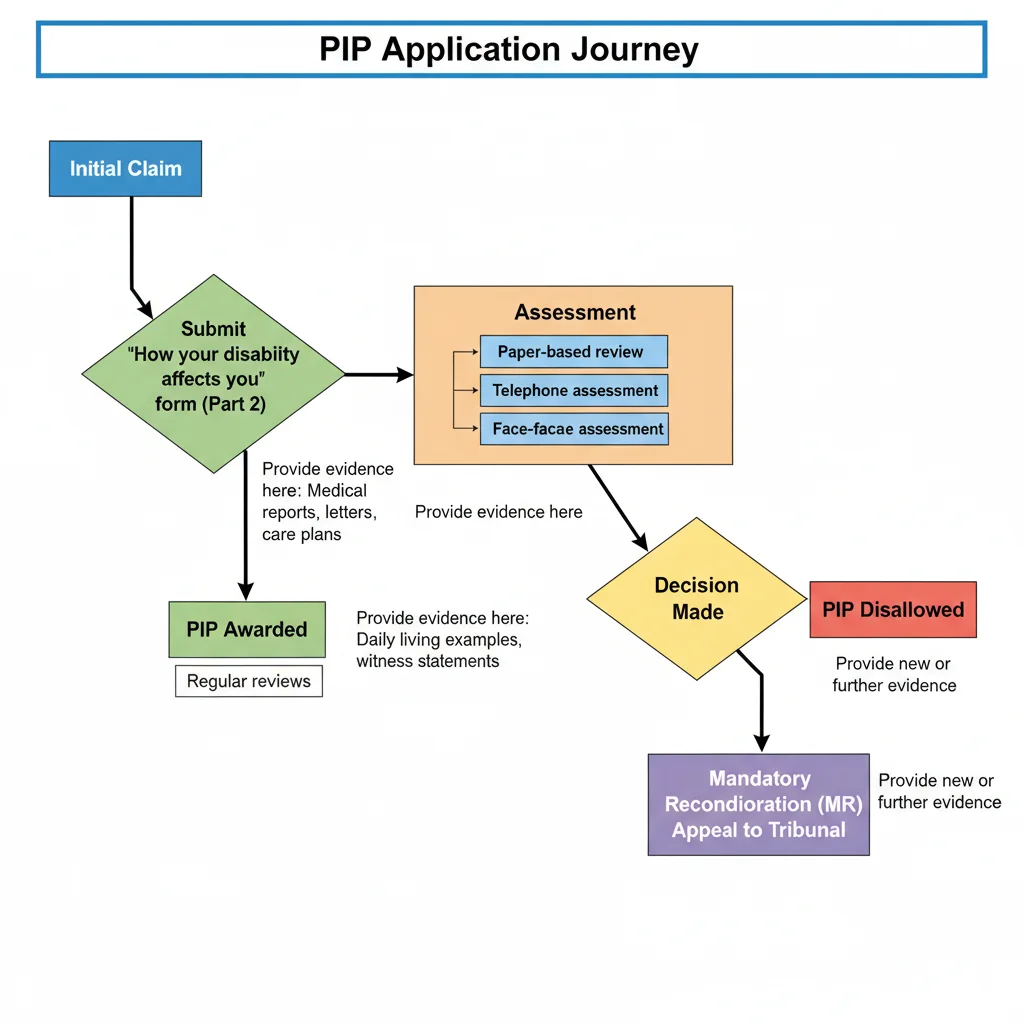
Step 4: Prepare for Your Assessment
Most PIP claims involve a health assessment, usually conducted by an independent assessor from companies like Capita or Atos. This assessment can be face-to-face, by telephone, or via video call. To prepare:
- Review Your Form: Reread your ‘How Your Disability Affects You’ form before the assessment to ensure consistency.
- Bring a Companion: It’s highly advisable to have a friend, family member, or support worker accompany you. They can take notes, help you remember details, and provide additional input if needed.
- Be Honest About Your Difficulties: Don’t try to ‘put on a brave face.’ Describe your difficulties as they genuinely are, particularly on a bad day.
- Explain ‘Why’: Don’t just state what you can’t do; explain *why* you can’t do it, linking it back to your condition and symptoms. For example, ‘I can walk 20 metres, but it causes severe pain and breathlessness, and I need to stop for 10 minutes to recover, making it impractical for daily journeys.’
- Demonstrate Aids: If you use an aid, explain how it helps and what would happen without it.
- Ask for a Recording: You have the right to request the assessment be recorded. This can be valuable if you later need to challenge the decision.
Step 5: Understand the Decision and What to Do Next
After your assessment, the DWP will send you a decision letter. This letter will explain whether you’ve been awarded PIP, at what rate (standard or enhanced for each component), and for how long. It will also include a ‘Statement of Reasons’ detailing how the decision was reached.
- Review the Statement of Reasons Carefully: Check if the assessor has accurately reflected what you said and if the points awarded align with your difficulties.
- Mandatory Reconsideration (MR): If you disagree with the decision, your first step is to request a Mandatory Reconsideration. You typically have one month from the date of the decision letter to do this. Clearly explain why you believe the decision is wrong, referring back to the PIP descriptors and providing any new evidence if available.
- Appeal to a Tribunal: If the MR doesn’t change the decision in your favour, you can appeal to an independent tribunal. This is a more formal process but often has a higher success rate than MRs. Seek advice from a welfare rights organization for this stage.
Key Strategies for Maximizing Your PIP Claim in Light of PIP 2026 Changes
Beyond the step-by-step process, several overarching strategies can help you maximize your PIP claim, especially as new rules come into play:
1. Stay Informed About Policy Updates
The DWP often publishes guidance and updates well in advance of official changes. Regularly check official government websites, disability rights organizations, and news outlets for information regarding PIP 2026 Changes. Being informed allows you to adapt your application strategy proactively.
2. Seek Professional Advice
Welfare rights advisors, charities, and legal aid services specialize in benefit claims. They can offer invaluable assistance with:
- Understanding complex legislation and PIP 2026 Changes.
- Completing the PIP2 form effectively.
- Preparing for assessments.
- Navigating Mandatory Reconsiderations and appeals.
Their expertise can significantly increase your chances of a successful claim.
3. Document Everything Consistently
Maintain a comprehensive file of all correspondence with the DWP, assessment providers, and medical professionals. Keep copies of your application forms, evidence, and decision letters. This documentation is vital if you need to challenge a decision.
4. Focus on the ‘Reliably’ Criterion
When describing your difficulties, remember that the DWP assesses whether you can perform an activity ‘reliably’. This means:
- Safely: Without endangering yourself or others.
- To an acceptable standard: The quality of the task is reasonable.
- Repeatedly: As many times as is reasonably required.
- Within a reasonable time period: No more than twice the time it would take someone without your condition.
If your condition prevents you from performing an activity reliably, even if you can technically do it, you should highlight this. For example, you might be able to wash yourself, but doing so causes extreme fatigue that prevents you from doing anything else for hours, or it’s unsafe due to dizziness.
5. Emphasize the Impact, Not Just the Diagnosis
Assessors are interested in how your condition affects your daily life, not just the diagnosis itself. Two people with the same condition might have vastly different levels of difficulty. Always focus on the functional impact – what you struggle to do, how often, and why.

The Broader Context: Why PIP Changes Occur
It’s important to understand that changes to benefits like PIP are often driven by a combination of factors:
- Government Policy Objectives: Governments may seek to refine benefits to ensure they are sustainable, better targeted, or align with broader social welfare goals.
- Feedback and Consultations: The DWP regularly consults with disability organizations, healthcare professionals, and claimants to gather feedback on the effectiveness of the system.
- Judicial Rulings: Court decisions can sometimes mandate changes to how benefits are interpreted or applied.
- Economic Factors: The overall economic climate can influence government decisions regarding welfare spending.
- Medical Advancements: As understanding of conditions evolves, so too might the way their impact is assessed.
While changes can be a source of anxiety for claimants, they are often intended to improve the system, even if the implementation can be challenging. Staying informed about the rationale behind PIP 2026 Changes can help you anticipate their potential impact.
What if My Condition Changes After My Claim?
If your health condition or disability significantly changes after you’ve made a PIP claim or received an award, it’s crucial to inform the DWP. This applies whether your condition improves or deteriorates. Failure to do so could lead to issues, including overpayments or not receiving the correct level of support.
- Deterioration: If your condition worsens and you now struggle with more activities or to a greater extent, reporting this could lead to an increased award. You might need to fill out another ‘How Your Disability Affects You’ form or attend another assessment.
- Improvement: If your condition significantly improves, you are also obligated to report this. Your PIP award might be reduced or stopped.
Always provide clear and concise information, supported by new medical evidence if available, when reporting a change of circumstances.
Looking Ahead: Advocacy and Support
The landscape of disability benefits is dynamic. Organizations dedicated to disability rights and welfare advice play a vital role in advocating for claimants and providing essential support. As PIP 2026 Changes come into effect, these organizations will be at the forefront of interpreting the new rules and helping individuals navigate the system. Engaging with these groups, even if just for information, can be incredibly beneficial.
Remember, applying for PIP is not about proving you have a condition, but demonstrating how that condition impacts your ability to live independently. By meticulously preparing, gathering comprehensive evidence, and understanding the nuances of the assessment process – and crucially, staying abreast of any PIP 2026 Changes – you can significantly improve your chances of a successful claim and secure the financial support you need.
Conclusion
The Personal Independence Payment (PIP) provides a lifeline for many individuals with disabilities and long-term health conditions across the UK. As we approach 2026, the DWP continues to review and adapt the benefit system to meet evolving needs and policy objectives. While the prospect of PIP 2026 Changes might seem daunting, it also presents an opportunity for a more refined and potentially more equitable system.
By understanding the foundational principles of PIP, anticipating the likely areas of change, and employing a diligent, evidence-based approach to your application, you can navigate the process with confidence. Remember to prioritize thorough evidence gathering, meticulous completion of forms, and proactive engagement with support services. Your ability to clearly articulate the impact of your condition on your daily life, backed by robust medical and personal accounts, is your strongest tool. Stay informed, stay prepared, and ensure you claim the support you rightfully deserve.