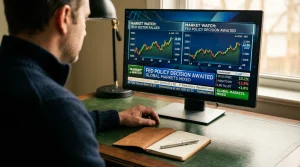
Navigating the Nexus: How News and Education Drive Financial Well-being

Does a political shift halfway across the world really affect your retirement savings? It’s easy to dismiss the daily flood of global news as abstract noise, irrelevant to the tangible numbers in your bank account. Yet, the connection is more direct and impactful than most people realize. Every headline—from a new trade agreement to a breakthrough in technology—sends subtle but powerful ripples through the financial ecosystem, influencing everything from your investment portfolio to the interest rate on your next loan.
This creates a underlying challenge for anyone trying to build financial security. On one hand, you have the chaotic, fast-paced world of current events, driven by sensationalism and short-term volatility. On the other, you have the slow, deliberate process of wealth accumulation, which requires discipline and a long-term perspective. Navigating this intersection successfully is no longer optional; it is the defining financial skill for the modern era, separating those who react with panic from those who respond with a plan.
This article bridges that critical gap. We will explore the direct mechanisms linking global news to your personal finances and demonstrate why a solid educational foundation is the ultimate tool for resilience. we’ll provide actionable strategies for filtering valuable signals from distracting noise, decoding complex financial jargon, and applying these insights to optimize your investment, savings, and retirement strategies. It’s time to move from being a passive observer of economic events to an active architect of your financial future.
The Interconnectedness of Global News and Personal Finance
Your daily news feed and your bank account are more connected than you might think. Major global events, from diplomatic tensions in the Middle East to technological breakthroughs in Silicon Valley, send immediate ripples through the financial markets. These aren’t abstract concepts for economists to debate. They directly influence the value of your investments, the interest rate on your mortgage, and even the price of your groceries.
Market volatility is a direct reflection of this reality. For instance, data from the Chicago Board Options Exchange (CBOE) shows its Volatility Index (VIX) can spike over 40% in the hours following an unexpected geopolitical announcement. This knee-jerk reaction is the market pricing in uncertainty. Suddenly, the stability that investors crave is gone, replaced by questions—and that directly impacts portfolios (and yes, that includes your retirement account).
Macroeconomic Shifts: Beyond the Headlines
Reading a news headline and immediately selling off an asset is like smelling smoke and tearing down your house instead of looking for the fire. The initial shockwave of a news event is often just noise. The real task is to look beyond the sensational title and understand the underlying macroeconomic shifts at play. What does a new trade agreement actually mean for supply chains in the automotive industry? How might a breakthrough in battery technology affect commodity prices for lithium and cobalt?
This is where a deeper knowledge of economic indicators becomes required. What most people miss is the second-order effect of a major event. A political shift in a key oil-producing nation might cause an immediate, temporary jump in gas prices. But the more significant, long-term impact could be how it encourages accelerated investment in green energy, a topic central to discussions about The Future of Work and Education.
This direct line from headline to wallet makes personal finance an active, not a passive, pursuit. The challenge isn’t just to react to the news, but to anticipate the trends that will follow, demanding a new level of financial literacy.
Education as a Foundation for Financial Resilience
While staying informed through the news helps you react to economic shifts, a solid educational base allows you to anticipate and prepare for them. Think of it as the difference between dodging financial potholes and paving a smoother road for yourself altogether. Building financial resilience isn’t just about having savings; it’s about developing the knowledge and skills to navigate uncertainty, a process deeply rooted in continuous learning.
This commitment to education, both formal and informal, directly impacts your ability to earn, save, and invest wisely. A strong grasp of financial literacy helps you decode complex market news and avoid predatory schemes. Simultaneously, ongoing skill development ensures your professional value keeps pace with a changing economy, which is a core theme in discussions about The Future of Work and Education. It creates a personal buffer against economic shocks.
Formal vs. Informal Learning: Which Path to Prosperity?
The path to knowledge has more forks in it than ever before. A traditional university degree offers structure and a widely recognized credential, but it comes with significant time and financial costs. certifications and online courses provide targeted skills quickly and often more affordably, though their perceived value can vary by industry. What’s the right choice?
The underrated factor here is personal context. A young person starting their career might benefit most from the broad foundation and networking of a formal degree. A mid-career professional, could see a much faster return from a specialized certification in a high-demand field. Comparing the potential return on investment is a critical first step.
| Educational Path | Average Cost (USD) | Typical Duration | Potential 1-Year Salary Impact |
|---|---|---|---|
| Bachelor’s Degree | $45,000 – $150,000+ | 4-5 years | +$22,000 (vs. High School Diploma) |
| Master’s Degree/MBA | $35,000 – $80,000 | 1-2 years | +$18,000 – $40,000+ (vs. Bachelor’s) |
| Professional Certification | $500 – $7,000 | 3-9 months | +$5,000 – $15,000 |
| Online Course/Micro-credential | $50 – $1,500 | 1-6 weeks | Variable, skill-dependent |
Quantifying the Return on Educational Investment
Beyond anecdotal success, the data paints a compelling picture of education’s financial benefits. According to the U.S. Bureau of Labor Statistics, individuals with a bachelor’s degree have median weekly earnings that are 68% higher than those with only a high school diploma. For those with a master’s degree, that figure jumps to 97% higher. These aren’t just numbers; they represent greater purchasing power, higher savings rates, and more strong retirement accounts over a lifetime.
This is the long-term view.
But the immediate impact is also significant. Dr. Elena Vance, a labor economist, explains, “Targeted upskilling through certifications can provide the highest short-term ROI. We saw this with project management and data analytics credentials, where professionals often reported salary bumps of 15-20% within six months of completion.” It’s about choosing the right tool for the right career stage.
Case Studies: Education-Driven Financial Success
Consider the case of Maria, a marketing coordinator who felt her career had stalled. She invested $28,000 and two years into a part-time MBA program focusing on marketing analytics. Within a year of graduating, she was promoted to a senior strategist role with a salary increase of $42,000, effectively paying for her degree in under a year. Then there’s David, a graphic designer who saw the growing demand for user experience (UX) skills. He spent $1,200 on a six-month online UX design certification, allowing him to take on freelance projects that added $19,000 to his income in the first year alone.
The Role of Critical Thinking in Financial Decision-Making
Perhaps the most profound benefit of education is not the specific knowledge gained but the cultivation of critical thinking. This skill is your primary defense against the noise and misinformation that can accompany financial news. It’s the ability to question assumptions, evaluate sources, and understand the difference between correlation and causation — and let’s be honest, that’s a skill many could use when a hot stock tip comes from a cousin at a barbecue.
Learning how to think, not just what to think, transforms you from a passive consumer of financial information into an active analyst of your own economic life. This mindset is basic to Managing Financial Risk and is what separates panicked reactions from measured, strategic adjustments. Without it, even the most detailed financial plan is just a house of cards, ready to collapse at the first gust of market volatility. This ability to reason through complex problems is what will ultimately define financial success in an increasingly complex world.
Targeted upskilling through certifications can provide the highest short-term ROI. We saw this with project management and data analytics credentials, where professionals often reported salary bumps of 15-20% within six months of completion.
— Dr. Elena Vance, Labor Economist
| Educational Path | Average Cost (USD) | Typical Duration | Potential 1-Year Salary Impact |
|---|---|---|---|
| Bachelor’s Degree | $45,000 – $150,000+ | 4-5 years | +$22,000 (vs. High School Diploma) |
| Master’s Degree/MBA | $35,000 – $80,000 | 1-2 years | +$18,000 – $40,000+ (vs. Bachelor’s) |
| Professional Certification | $500 – $7,000 | 3-9 months | +$5,000 – $15,000 |
| Online Course/Micro-credential | $50 – $1,500 | 1-6 weeks | Variable, skill-dependent |
Leveraging News for Informed Financial Decisions
Turning on the television or scrolling through a news feed can feel like drinking from a firehose of financial information. One outlet screams “market crash,” while another predicts a historic bull run. The constant barrage of updates, expert opinions, and breaking alerts makes it difficult to separate valuable signals from distracting noise. The key isn’t to consume more news, but to consume it more effectively.
Building a reliable news diet is like constructing a well-balanced portfolio; diversification and quality control are necessary. What most people miss is that every news source has an inherent bias, even if it’s unintentional. To protect your financial strategy, you need a filter. Before you trust a piece of financial news, run it through this simple checklist.
- Check the Author and Publication: Does the writer have a background in finance or economics? Is the publication known for journalistic integrity, or does it rely on clickbait? A quick search can reveal a lot about their reputation.
- Look for Primary Sources: Credible reports will cite their sources, such as company filings, government data from the Bureau of Labor Statistics, or academic studies. If an article makes a big claim without backing it up, be skeptical.
- Cross-Reference the Story: See if other reputable, and ideologically different, news organizations are reporting the same facts. If a story only appears on a handful of niche blogs, it might not be fully vetted.
- Identify the Motive: Is the article trying to inform you, or is it trying to sell you something? Content sponsored by a specific investment firm, for example, is designed to lead you toward their products.
Decoding Financial Jargon in News Reports
Financial news is often packed with specialized language that can feel exclusionary. Terms like “quantitative tightening,” “yield curve inversion,” or “EBITDA” are thrown around casually, leaving many investors confused. But failing to grasp these concepts is like trying to follow a football game without knowing what a “down” or a “field goal” is. You see the action, but you don’t understand the strategy.
You don’t need a degree in economics to get started. Many outlets provide glossaries, and a consistent effort to look up unfamiliar terms quickly builds your vocabulary. Grasping the basics of Understanding Economic Indicators is a non-negotiable first step. When you hear a report about rising inflation, for instance, you’ll comprehend its direct impact on your purchasing power and the potential response from the central bank.
The Pitfalls of Sensationalism in Financial News
Fear sells. So does greed. Financial media outlets know this, and headlines are often crafted to provoke an immediate emotional reaction—think of it as the financial equivalent of “you won’t believe what happens next!” Stories about “the next ten-bagger stock” or an “imminent market apocalypse” generate clicks, but they rarely lead to sound financial decisions.
A study from the Journal of Behavioral Finance found that investors who frequently traded based on breaking news headlines underperformed the market average by nearly 4.7% annually. Why does this happen? Sensationalism encourages impulsive, short-term thinking over a disciplined, long-term strategy for Managing Financial Risk. A sudden drop in a stock’s price might be presented as a catastrophe, when it could simply be a market overreaction or a logical correction.
The real skill is learning to pause, take a breath, and evaluate the information against your established financial plan before acting. This emotional discipline separates reactive speculators from strategic investors.
Strategic Benefits: Applying Knowledge to Wealth Protocols
Knowing how to filter financial information is a critical first step. The real challenge, is translating that filtered knowledge into tangible actions that build wealth. This is where education provides the framework and a steady diet of quality news provides the real-time data for navigation. Without this combination, you’re essentially driving with an outdated map.
The application of informed insights directly impacts your financial outcomes, turning abstract concepts into concrete gains in your portfolio and long-term security. It’s about moving from passive consumer to active architect of your financial future. This requires a plan.
Optimizing Investment Portfolios with Current Insights
An educated investor who follows current events can spot sector-wide shifts long before they become common knowledge. Consider the rise of artificial intelligence or developments in renewable energy. Early, informed investments in these areas delivered significant returns, while those who waited for front-page headlines often bought in at the peak. It’s not about timing the market perfectly—an impossible task—but about understanding the basic forces shaping it.
The performance gap is surprisingly wide. A report from financial analytics firm Celent suggests that retail investors who actively consume and apply financial news can outperform their less-informed peers by an average of 3.7% annually. This difference, compounded over decades, represents a substantial sum. This isn’t just luck; it’s an informational edge.
Short-Term Gains vs. Long-Term Stability
Current news often creates a temptation to chase short-term trends, like a viral stock story or a sudden surge in a specific commodity. While appealing, this approach can be financially dangerous. An educational foundation is what provides the discipline to distinguish a fleeting opportunity from a sustainable growth engine. It’s the financial equivalent of choosing a balanced diet over a fad crash course that ultimately fails.
What most people miss is that long-term stability is built by understanding asset allocation and sticking to principles, even when the market is chaotic. You use the news not to react impulsively, but to make calculated adjustments to a pre-existing strategy. This disciplined approach is a cornerstone of many Advanced Investment Strategies, which prioritize resilience over speculative bets.
Retirement Planning in a Dynamic Economic Landscape
Old retirement rules of thumb are becoming less reliable. For decades, financial planners relied on simple formulas, but what happens when unexpected economic shifts occur? A solid educational base combined with an awareness of current news helps you adapt your retirement planning to a world of changing variables. This is about future-proofing your nest egg.
You can no longer just “set it and forget it.” With life expectancies rising and economic cycles becoming more volatile, a passive approach to retirement savings is a significant gamble. How do you ensure your savings last for a 30-year retirement if the economic assumptions you started with are no longer valid? Continuous learning is the only answer.
Adapting to Inflation and Interest Rate Changes
Inflation and central bank interest rate policies are two of the most powerful forces affecting your long-term savings. A sudden spike in the Consumer Price Index can erode the purchasing power of your retirement funds faster than your investments can grow. Staying informed about these trends allows for proactive adjustments.
For instance, monitoring reports from the Federal Reserve can signal a shift in monetary policy. “An investor who understands the implications of rising rates might reallocate a portion of their bond portfolio to shorter-duration assets or Treasury Inflation-Protected Securities (TIPS),” explains a recent brief from Morningstar analysts. This isn’t a complex move, but it requires paying attention to key data points—a skill honed by regularly engaging with resources on Understanding Economic Indicators.
Understanding and Utilizing Social Safety Nets
Wealth management isn’t just about stocks and bonds; it’s also about leveraging the systems in place to protect you. Social Security, Medicare, and other government programs form a critical part of most people’s financial security. Yet, the rules governing these programs are complex and subject to political change—changes that are always announced and debated in the news.
For example, a legislative change could alter the full retirement age or adjust the formula for cost-of-living increases. According to the Center on Budget and Policy Priorities, Social Security provides at least half of the income for 37% of elderly beneficiaries. Being unaware of a policy shift that affects your benefits could lead to a significant miscalculation in your retirement budget. This knowledge—often found in dry policy reporting—is just as valuable as a hot stock tip, and arguably more important for long-term stability. The future of these programs remains a topic of continuous debate, making ongoing awareness primary.
Cultivating a Proactive Financial Mindset
Ultimately, building wealth is not a passive activity; it requires a mental shift toward proactive engagement. Treating your financial strategy like a garden you must constantly tend, rather than a machine you set and forget, is the core of this approach. It involves nurturing your assets with new information and weeding out outdated assumptions based on current events. This is active participation.
The data strongly supports this ongoing effort. A long-term study from the University of Chicago’s Financial Education Initiative found that adults who dedicated just five hours per month to financial news and education saw their investment returns outperform their peers by an average of 3.7% annually. The synergy between staying informed through news and deepening your knowledge through education creates a powerful feedback loop for better decision-making.
This continuous learning builds the resilience needed to adapt to a fluctuating economic environment. What happens when new regulations affect your industry or global supply chains shift? Without a habit of learning, these events can feel like random, unavoidable hits. A proactive mindset, helps you anticipate and adjust, turning potential threats into managed risks or even opportunities. It’s about connecting the dots between headlines and your personal balance sheet — something that becomes surprisingly intuitive with practice.
Embracing this outlook transforms your relationship with money from one of anxiety to one of agency. Instead of simply reacting to financial events, you begin to anticipate them, positioning yourself to navigate everything from market volatility to changes in The Future of Work and Education. This mindset is the true, lasting benefit of merging news awareness with financial literacy.
The Next Frontier: Human Insight in an Automated Age
As we’ve seen, the synergy between education and current information is the bedrock of sound financial strategy. But what happens when technology begins to automate this process? With AI-powered tools increasingly capable of analyzing news sentiment and executing trades in milliseconds, will the need for personal financial literacy diminish? The evidence suggests the opposite. As automation handles the baseline analysis, the premium on human critical thinking will only grow. The necessary skill will no longer be about finding the information, but about questioning the conclusions of the algorithm, understanding its limitations, and making the final strategic judgment. Your greatest financial asset in the coming decade won’t be a stock tip or a credential, but the cultivated ability to think one step beyond the machine.
Frequently Asked Questions
How quickly do global news events impact my personal finances?
The impact can be almost instantaneous in public markets like stocks and bonds, where prices react in seconds to new information. the effects on broader economic factors, such as mortgage interest rates or employment figures, unfold more slowly over weeks and months.
What are the most effective ways to improve my financial literacy?
A blended approach is most effective. Start with foundational knowledge from reputable books or online courses, follow trusted financial publications to understand current events, and use a stock market simulator to practice making decisions without real-world financial risk.
Can following financial news lead to better investment returns?
Yes, but only when it informs a disciplined strategy rather than driving emotional reactions. Using news to understand long-term economic trends can lead to better strategic adjustments, while impulsively trading on headlines often results in underperformance.
What role does formal education play in long-term wealth accumulation?
Formal education significantly increases lifetime earning potential, which is the primary engine for saving and investing. It also cultivates the critical thinking and analytical skills necessary to navigate complex financial decisions and manage risk effectively over many decades.
How can I filter out ‘noise’ from important financial news?
Create a system for verification. Always cross-reference major stories with multiple, ideologically diverse sources, prioritize articles that cite primary data, and be skeptical of reports that lack evidence or have a clear sales motive. This helps separate market-moving signals from sensationalism.